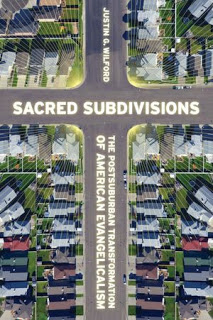
South China Morning Post: School Transgender Policy Row

I have received quite a warm welcome back to Vancouver for my doctoral graduation today. Ian Young has done a masterful job of quoting me in today’s edition of the South China Morning Post.

scmp_ianyoung

The article is about how Chinese Christians — in particular, Cantonese-speaking evangelicals — in Vancouver are contesting the Vancouver School Board’s proposed policy for transgender faculty, students, and staff. There is both a main article and a side column based mostly on a reading of chapter 5 of my dissertation.

The controversy centers on those who have opposed the policy because they feel that their ‘parental rights’ to educate their children primarily in the private sphere have been violated. As I explained to Young:

This is not really a debate about homophobia. It’s a debate about parental rights … and this has been the long-standing theme in these debates in Vancouver…Chinese Christians have this vision for a rational orderly society. A particular reading of the Bible may inform this, a particular reading of the Chinese classics may inform this. But at the heart of it, it’s about a rational orderly society, where parents are the primary educators for their children. What they are seeing instead with this kind of stuff [the board’s proposals] is that this is irrational and disorderly. That’s why there is such a strong pushback.

In addition, I emphasized that these political activities ‘were not a “church effort” but involved churchgoers in a secular way, “through Chinese Christian e-mail chains, informal conversation and assorted Chinese Christian media”.’

I am very thankful to Ian Young for our collegial relationship. He first contacted me last year about an article on youth transitioning to adulthood between Hong Kong and Vancouver, a topic that Jo Waters and I had written on in Global Networks. I found Young’s questions very perceptive and incisive, always pushing me to draw out my points, to illustrate with examples, and to pose counter-illustrations. I suppose I should expect no less from the former International Editor of the SCMP, but I must say that it is always a pleasure to work with someone at the height of his craft.

I also appreciate how Young engages multiple sources in his account in order to draw out the multi-sided complexity of this debate. His interview with Cheryl Chang is revelatory both because of how Chang insists on her secularity as a concerned parent activist and because she was the legal advisor for the Anglican Network in Canada, a realignment group that sued the diocese for their property because they insisted that it was they who were holding to historic Anglican orthodoxy on theological doctrine and sexual praxis. He not only quotes me about the non-church-based Chinese Christian networks, but goes right to the source, Truth Monthly, one of the two premier Chinese Christian newspapers in Vancouver (the other is Herald Monthly). He has done his research on Charter Lau, mostly through my dissertation, but instead of just quoting the thesis, he has used it to trace the precedents for this poobah in both Burnaby’s Policy 5.45 controversy in 2011 and the ongoing debate about Bill C-279 to amend the Canadian Human Rights Act and the Criminal Code (my dissertation fieldwork took place during the C-389 controversy).
[UPDATE: May 23, 2014: These items have been corrected in the online edition.]

As this information develops, however, I do want to make two very minor clarifications to the record, none of which affect Young’s larger point. The ‘CSCF’ that Young mentions is the ‘Christian Social Concern Fellowship,’ not the ‘Christian Social Conservative Fellowship.’ While many of its members are politically conservative and some are card-carrying members of the federal Conservative Party of Canada, ‘social concern’ is a term derived from mainline Protestantism in Hong Kong to talk about the church getting involved in social action. The second is that the Truth Monthly post date is from the January 2014 issue. That this post predates the debate by four months instead of several weeks in fact strengthens Young’s point about this transgender issue being widely discussed in Chinese Christian media.

Again, many thanks to Ian Young for a very thorough article and sidebar for SCMP. I look forward to further collaboration in the future.

SSHRC Postdoc Fieldwork, Summer 2014

I’ve got some fun news. I’m back in the field!

I’ve really missed this. Much of my PhD was consumed with doing ethnographic fieldwork, key informant interviews, and focus groups, both for my actual doctoral project (see my work in San Francisco [x2], Vancouver, and Hong Kong) as well as for the collaborative project on the Highway to Heaven in Richmond, BC. After finishing all of that, I did a ton of writing, which has resulted in a dissertation and will result in a series of publications that you can expect to roll out over the next few years.

But as the summer is starting up, teaching is done, and frameworks are being solidified, it’s time to do some new fieldwork for the Social Sciences and Humanities Research Council of Canada Postdoctoral Fellowship. That’s the whole reason I’m here in Seattle in the first place.

I need your help. I need to talk to people.

Here’s what the project is about.
I am interested in publics. Asian American and Asian Canadian Christian publics, to be specific. And to be really precise, in Seattle and Vancouver, for now. And to be super-precise, publics produced by the younger generation.

What are publics?
That’s actually what I want to find out. There’s a huge academic literature on publics, as well as a lot of popular reflection. In general, a public is just whenever someone puts something into circulation and creates an audience. This is usually contrasted with the private, which means stuff that’s not supposed to be circulated outside of a self-governed institution, like a family, a church, or a corporation. But do younger-generation Asian American and Asian Canadian Christians think of their work as public or private? That’s the golden question.

So what are you really interested in?
I’m interested in how younger-generation Asian American and Asian Canadian Christians understand their participation in making publics. This can be really broad. It can include stuff like electoral politics, grassroots activism on a variety of issues, social media participation, artistic/musical production, social services, and a lot more stuff. Like my PhD on Cantonese-speaking Protestants and how they engaged the civil societies of Vancouver, San Francisco, and Hong Kong, I let the data drive the issues that I explored.

So what’s the key research question? (Because I’m a social scientist and I know what I’m talking about.)
The key research question is: how do younger-generation Asian American and Asian Canadian Christians in Seattle and Vancouver engage and create publics?

How will you find out about this?
By talking to people. My research is usually driven by key informants. These are usually named individuals (although I always give the option for anonymity) who are positioned well to provide information about a phenomenon. My research is qualitative, so unlike a statistics-based project, I’m not aiming for representativeness. I’m trying to get stories, opinions, perceptions, and insider explanations on the record. To make sense of this data, I usually overlay it with focus groups of lay people and extensive methods where I consult quantitative data that’s already out there. I also use the key informant research to point me to documents that I need to put in my archives.

Who do you need to talk to?
I need to talk to key informants who can talk intelligently about how younger-generation Asian American and Asian Canadian Christians make publics. This means that they are usually a) talking about their own work as an individual or part of an institution or b) talking about people that they work very closely with.

What do you mean by Christian?
I mean people who self-identify as Christian. Evangelicals, liberal Protestants, Catholics, Orthodox, hard to categorize, etc. If you’re from another religious tradition or not part of a religious tradition and still want to talk to me, let’s also talk…about Christians.

By Christian, do you mean that you want to talk to Asian American and Asian Canadians who are doing Christian stuff in the public sphere?
NO. I’m also interested in people who are working in the secular public sphere but personally identify as Christians. If the public stuff doesn’t have much to do with personal identification as Christian, that’s interesting too!

What do you mean by younger-generation?
I mean ‘second-generation’ (i.e. born in North America) + people who came here when they were young. This way, I don’t exclude people I should be talking to arbitrarily based on birth. It also means that I’m interested in talking to people who do work in Asian languages, not just English-speaking.

But ‘Asian’ is so diverse!
I know! The thing is, there’s this theory that I’m trying to suss out called pan-ethnicity. People who work on second-generation stuff (especially my colleague Russell Jeung in his book Faithful Generations) have noted how Asian Americans — and to some degree, Asian Canadians — cooperate across ethnic lines (i.e. Chinese, Korean, Filipina/o, Japanese, Indian, Vietnamese, Cambodian, Indonesian, Malay, etc.) and talk about themselves as ‘Asian.’ I want to see if that works when Asian Americans and Asian Canadians do stuff in the public sphere.

But I don’t live in Seattle or Vancouver.
That’s OK. For one thing, I need your information to contextualize what I’m finding here in the Pacific Northwest. For another, the data here might lead to sites outside of the Pacific Northwest because this public work might not be regionally bound.

Do you have ethics clearance for this research?
Yes. The University of Washington’s Human Subjects Division in fact determined that my research was exempt from review under Category 2 of their Exempt Determination. This means that — given adherence to common-sense ethical research procedures — my work has been approved by the university.

I’ll be working on the initial phase of collecting data for this project in Seattle and Vancouver throughout Summer 2014. This initial phase means that I am very interested in talking to key informants. This usually means setting up an interview that is usually audio-recorded, lasts for about one hour, and is transcribed for accuracy. I have a formal letter of invitation, consent form, and interview questionnaire available, if you want to see that before talking to me.

Contact me at jkhtse (at) uw (dot) edu, and let’s talk!

Drinks with Dominicans: Catholic-Anglican ecumenism

On Tuesday, 22 April 2014, the monthly Drinks with Dominicans event will be held as usual at Blue Star Pub and Cafe in Seattle. As a ministry of Blessed Sacrament Church (a Catholic parish run by the Dominican order in Seattle’s U-District), the event usually brings together a sizeable group of young adults ages 21-35 for drinks with Dominican friars. It’s a bit like Theology on Tap, except that they bring in speakers, not bishops, to talk about special topics. For example, this January, Cosmos the in Lost’s Artur Rosman spoke on the Catholic imagination.

I’m delighted to announce that I am tomorrow’s speaker.

I’ll be talking about Catholic-Anglican ecumenism. It feels right, given my latest work for Logos Anglican, and it gives me an opportunity to air out in an informal setting some of my thoughts about Catholic-Anglican relations.

Some things to look forward to:

  • Why is the Anglican Communion such a mess?
  • Who runs the Anglican Communion anyway?
  • What does the word ‘Anglican’ even refer to?
  • Was Anglicanism really started by a king who wanted a divorce?
  • Is there any hope for Anglicans and Catholics to walk together?
  • Why does Justin think that Harry Potter is an Anglican?
  • Why does a geographer get to say anything about ecumenism in the first place?

All this, and a bit more, tomorrow at drinks at Dominicans. All are welcome. The event starts at 7:30. I’ll probably be there early because I want to eat well first.

Association of Asian American Studies, 16-19 April 2014, San Francisco, CA

Hooray! I’m really happy to say that the Association of Asian American Studies’s Annual Meeting is taking place 16-19 April 2014 in the metropolis that I called home for 18 years: the San Francisco Bay Area. We’re right at Union Square in San Francisco at the Grand Hyatt.

My contribution to this conference will be at a panel organized by Dean Adachi titled San Francisco: The Asian American Holy City? It will be meeting in the Larkspur room at 8 AM. My paper is titled ‘The War on Poverty and the Emergence of Evangelism: the Chinese American mainline and the new evangelicals in San Francisco’s Chinatown.’
Here’s the abstract:

This paper fills a necessary gap in contemporary discourses about Chinese American Protestant churches. Expected both to be progressive because of their immigrant commitments and conservative because of their Protestant practice, the stories of how Chinese American Protestant congregations became so politically contradictory is seldom told. This paper examines San Francisco’s Chinatown as a site of contestation that produced these contradictions. In the 1960s and 1970s, mainline Protestants in Chinatown joined the War on Poverty as part of a commitment to social justice and the development of an antiracist Asian American theology that was committed to the betterment of Chinatown as a Chinese American community. These efforts were simultaneously contested by newer Chinese evangelical migrants from Hong Kong who re-oriented some congregations and built new ones in reaction to what they perceived as ‘liberal’ social justice orientations, launching ‘conservative’ congregations that preserved the distinction between the secular public sphere and the church’s evangelistic, worshipping, and biblical teaching activities. The co-existence of these two kinds of congregations and their challenges to each other suggests that Chinatown itself needs to be conceptualized as a space of theological contestation, producing perceptions of Asian American religion as politically contradictory that require further examination in Asian American studies.

The other panelists are Dean Adachi (Claremont) and Helen Kim (Harvard). We are very excited to have Russell Jeung (SFSU) as our discussant. [For some reason, my name does not appear on the program. This is likely because on a draft program, I saw that my name had been misspelled as ‘Justin K.H. Hse.’ I registered under my real name. Dean also asked them to correct this, but the error was probably caught too late.]

I’m excited to be in my home metropolis to learn and to meet with colleagues in Asian American studies. It’s a bit unfortunate that this conference is taking place during Holy Week, but I’m making the best of all worlds. If San Francisco is the Asian American holy city, I’m going to spend Holy Week right here.

Association of American Geographers, Tampa, FL (8-12 April 2014)

I am writing from Tampa, Florida to talk about the national conference that I am attending. As usual, I am at the Annual Meeting of the Association of American Geographers. There’s a lot going on here in geographies of religion (check out our specialty group’s newsletter) – the field seems to be growing, though many of my colleagues couldn’t attend this year! – and I will also be checking out sessions on migration, Asian geographies, urban studies, and other things, in addition to meeting colleagues and catching up with old ones.

I am presenting in a session this afternoon (Tuesday, 8 April) on Critical Geographies of Religion. My paper is titled The Civil Human Rights Front: religion and radical democracy in post-handover Hong Kong and features a lot of the field work I did among progressive Christian groups in Hong Kong in 2012. Here’s the abstract:

After Hong Kong returned to Chinese sovereignty in 1997, the Special Administrative Region has seen the emergence of calls for universal suffrage, the preservation of civil liberties, and solidarity with the materially marginalized in Hong Kong’s civil society.  In one moment of collective solidarity, an umbrella group called the Civil Human Rights Front launched a protest against anti-sedition legislation based on Basic Law’s Article 23, a law whose alleged threats to free speech drove some 500,000 Hongkongers to the streets on 1 July 2003.  This paper analyzes the radical democrats who have been key to such political placemaking activities in Hong Kong, contesting the city’s policy landscape through physical demonstrations.  It argues that while a wide swath of Hong Kong’s Catholics and Protestants have historically been allied with the state establishment both under British and Chinese sovereignty, the emergence of radical democratic groups like the Civil Human Rights Front have been driven largely by Catholic and Protestant Christians who emphasize a separation of church governance from the state.  While the separation of church and state has often lent itself in other contexts to more conservative politics, this spatial schematic has led these radical democratic activists, their churches, and their solidarity groups to contest the modus operandi of Chinese sovereignty.  This is thus a contribution to critical geographies of religion, for it shows the potential power of religious movements to critique the practices of the state in order to imagine more socially just cities.

There are two parts to this session. I am the first paper on the first part, which promises to be an engaging discussion on religion, politics, and the public sphere. Find us in Room 17 on the First Floor of the Tampa Convention Center. The first session is from 2:40 PM – 4:20 PM. The second session runs from 4:40 PM – 6:20 PM.

Tomorrow (Wednesday, 9 April), political geographer John Agnew will be giving our Geography of Religions and Belief Systems (GORABS) Annual Lecture. His lecture is titled The Popes and the city of Rome during Fascism, 1922-1943. Here’s the abstract:

It has become popular in recent years to see the Fascist years in Italy as reflecting the relatively successful transformation of Italian society at the behest of its Fascist rulers. This reflects both the rehabilitation of Fascism in contemporary Italy and the “cultural turn” in Italian historiography that has tended to emphasize the “making” of Fascist selves and other markers, such as the makeover of many urban monumental spaces, as measures of the regime’s success. My purpose is to disrupt this emerging consensus, alongside other commentators I hasten to add, by pointing how much the Fascist regime had to collaborate with other powers, not least the Catholic Church, and was often outflanked by them in its designs, most notably in efforts at making over the city of Rome as its showcase capital.

We want as many people as we can to attend, and we hope to see many of your there! Find us in Room 23 of the First Floor of the Tampa Convention Center, Wednesday, 9 April, 10 AM – 11:40 AM.

Please also join us for our business meeting. That is scheduled for Thursday, 10 April, from 7:30 PM – 8:30 PM in Room 9, Tampa Convention Center, First Floor. I will be chairing, and if you want the meeting agenda, please email me.

I look forward to a lot of collegial interaction this week, and I am anticipating learning a lot! It’s great to be with people in my home discipline, and I hope I have more to bring this year from all of my interdisciplinary journeying.

Guest content blogging for Logos Anglican

With the publication of my first guest post on Logos Anglican, I am pleased to announce that I’ve been brought on as a guest blogger to write content once a month. My first post reads the current Archbishop of Canterbury, the Most Revd Justin Welby, through the lens of fourteenth-century English visionary and theologian Julian of Norwich.

Anglicanism isn’t something that I’ve written explicitly about in my scholarly work. I do cover the resignation of Rowan Williams as Archbishop of Canterbury in an early post on Religion Ethnicity Wired (I posted on the day that Benedict XVI resigned from the papacy!), and a co-authored chapter with my doctoral supervisor David Ley does discuss Global Anglicanism in the context of religious migration from the Global South.

I really do happen to know a thing or two about the Anglican Communion, though. Let me explain.

I study religious publics. In particular, I study how religious publics have formed in ‘secular’ civil societies in the Asia-Pacific and in Asian North America.

Studying religious publics in this region and among this population makes the Anglican Communion simply unavoidable. Anglicanism is everywhere, not least because of the colonial legacy of the British Empire (which is why there is a ‘Communion’ in the first place). I intend for my posts on Logos Anglican to draw out the more general implications of what I’ve learned (and am continuing to learn!) from my Asia-Pacific and Asian North American research for the Anglican Communion. Consider it me giving back in my small way to a field that has given me so much.

Indeed, Anglicanism was everywhere since the beginning of my graduate work. The pseudonym ‘St. Matthew’s Church’ that I used during my master’s thesis work (see here) referred to an Anglican church. Indeed, I was questioned repeatedly about calling this church an evangelical church by those who were used to institutions like the Anglican Church of Canada and The Episcopal Church as the mainline. My defence was that this congregation, like any other church, had porous boundaries that allowed for people from other evangelical traditions to join. Because of its connections to other Chinese churches in the Metro Vancouver area, it served as a great case study for how a Hongkonger Christian church ‘family’ was constructed, regardless of denomination. But read the thesis as well as the article, and it’s pretty obvious that the evangelicalism there has an Anglican flavour, especially when members spoke about the ‘liturgy.’

My doctoral work took the question of the Anglican Communion much more seriously. My dissertation (which I am now developing into a book manuscript) dealt with how Cantonese-speaking Protestants in Hong Kong, San Francisco, and Vancouver engaged their secular civil societies. Within this Cantonese Protestant rubric, Anglicans played major roles in all three sites. If I learned anything about Anglicanism from this project, it was that there are multiple ways of doing Anglican theologies in the public sphere. I discovered also that taking a side in Anglican debates would also detract from the more interesting geographical project of mapping the diverse ways that Cantonese-speaking Anglicans approached secular civil societies.

To get at the history of Cantonese-speaking Protestantism, I had to deal with the history of colonialism in Hong Kong, including the role of the Anglican Church as an arm of the British Empire (something that the current Primate of the Hong Kong Sheng Kung Hui, the Most Revd Paul Kwong, has discussed in his Identity in Community). But lest one start throwing post-colonial rocks at the supposed uniform conservatism of Hong Kong Anglicanism, I also researched a progressive, post-colonial strand that emphasizes social justice, democratic solidarity, and sexual equality that developed in Hong Kong from the 1980s into the present day, particularly in the work of feminist theologian Rose Wu Lo Sai. If there is one thing that characterizes Hong Kong Anglicanism, it’s that it is very theologically diverse, comprising liberal, liberationist, evangelical, and Anglo-Catholic strands against a very conscious backdrop of its colonial legacy.

At the same time, the question of global Anglican politics came up during my fieldwork in Vancouver (and to some extent, in San Francisco as well). Chinese Anglicanism was a touchy political topic in Vancouver because the Diocese of New Westminster is one of the three known ‘fault lines’ in what has come to be known as the Anglican realignment, the breaking-away of parishes from home dioceses to seek alternate episcopal oversight due to disagreements usually over sexuality issues. Among Cantonese Protestants in Vancouver, the departure of three Chinese Anglican parishes from the Anglican Church of Canada (along with a lawsuit advanced by two of them, no less!) was still the talk of the town while I did my fieldwork, and because of this, my empirical work led me to research both the perception of the splits from within Cantonese Protestant circles more generally as well as what actually happened in the Anglican realignment in Vancouver. By contrast, the Chinese Episcopal parishes in the San Francisco site had not broken away from their dioceses, and that served as an interesting foil to the Vancouver case study. Add to that the fact that social geographers in the United Kingdom have been discussing this Anglican realignment in recent major publications in the geography of religion, and this is yet another geographical spin on Anglicanism that comes straight out of my dissertation.

My postdoctoral work on younger generation Asian American and Asian Canadian Christian publics shows no signs of letting up on Anglicanism. Aside from the fact that I’m using my postdoctoral fellowship to churn out articles from my graduate work (including articles on Chinese Anglicanism in its very diverse forms), there are younger generation Anglicans at work forming publics. To give one immediate example, the Asian American open letter to the evangelical church last October 2013 would not have happened without the efforts of the first Korean American woman to be ordained in the Episcopal Church, the Rev. Christine Lee at All Angels’ Church (yes, for those who have read Lauren Winner’s Girl Meets God, the same parish!). I have also met other Asian American and Asian Canadian evangelicals who are interested in constructing ‘sacramental publics’ and find Anglican traditions useful. These experiments with sacramentality are not just limited to Anglicans, but as I’ve hinted at in this blog post on Alliance pastor Ken Shigematsu, some experiments dovetail (likely unintentionally) with local Anglican developments. All this is work in progress, but suffice it to say that the work on Anglicanism in Asian America and Asian Canada may prove productive indeed.

In other words, my field work has immersed me in the life of the Anglican Communion with its colonial legacies, social justice work, aesthetic emphases, divergent theologies, and communion fractures. My posts on Logos Anglican are meant to draw out the implications of my work for Anglicanism, to be informed by what I’ve done ethnographically as I read Anglican texts.

It’s no secret that Logos Anglican is using these posts to sell their e-book collections of Anglican works. Their collection is impressive, comprising patristic and medieval sources as well as key Anglican divines such as Thomas Cranmer, Richard Hooker, Lancelot Andrewes, J.C. Ryle, John Henry Newman, Michael Ramsey, and N.T. Wright. The Anglican ecumenist Paul Avis also makes a significant contribution. But it should also be no secret that I’m approaching Anglicanism based on my particular immersion and ongoing academic reflection on Global Anglicanism and religious publics, especially in sites that grapple in diverse ways with what theologians Ian Douglas and Kwok Pui-lan call getting beyond colonial Anglicanism.

All this is to say, I look forward to giving back to a tradition that has given me so much. I’d also like to give a special shout-out to Ben Amundgaard, the product guy at Logos Anglican, thanking him especially for being simply awesome to work with. I look forward to having my immersion into all things Anglican deepened through this encounter with Logos Anglican, and I am very excited about the conversations to follow.

Book Review: Ellen Wu, The Color of Success: Asian Americans and the Origin of the Model Minority

I’m happy to announce that I’ve got a book review of a very good book in the newest issue of Amerasia Journal. That I am announcing that I have a book review in a new journal issue means that this announcement is in fact a chance to rave about this new book. And rave I shall.

The book that I reviewed is Ellen Wu’s The Color of Success: Asian Americans and the Origins of the Model Minority.

If you have not read this book already, you must. It is a magnificent historical account of how Japanese Americans and Chinese Americans were in fact part and parcel of the construction of the model minority ‘success story’ myth after the Second World War. It provides rich institutional histories of organizations like the Chicago Resettlers’ Committee, the Japanese American Citizens’ League (JACL), Chinese News, and the Chinese Consolidated Benevolent Association (CCBA). It is a complicated history, combining policy structures with community activism and the agency of individual actors. It accounts for both ideologically conservative and progressive strands among Asian Americans. It opens up theoretical questions about American liberalism. It is — dare I say it — a tour de force.

I want to especially thank Arnold Pan, the Associate Editor of Amerasia Journal, for making this book review happen. The journal issue is titled Asian American Religions in a Globalized World, a topic that is of immediate interest to me. When I asked him last December whether Wu’s book was taken for review, he told me that if I could give him a one-month turnaround, then I could be part of this special issue. This review was the first thing that I published during my postdoctoral fellowship, and I honestly feel so privileged to have started by reviewing such a good book. While some might consider book reviews part of the tedium of academia, this particular book review was a real treat (in fact, I am bold enough to say that I consider most books that come across my desk as gifts, not a grind! – but this one really takes the cake!). I think it’s also appropriate that this review ended up in this particular special issue. With her questions about liberal ideologies of assimilation and community structures, Wu opens up many possible avenues for theorizing Asian American religion.

This book will be of wide interest to many. As I say in the review, Wu is walking in the footsteps of giants like Yuji Ichioka, Him Mark Lai, Lisa Lowe, Henry Yu, Kandice Chuh, and Madeline Hsu. Read it. And read the special issue.

“The Last Acceptable Prejudice” and “The Last Civil Rights Struggle”: Anti-Catholicism, Same-Sex Marriage, and Racial Solidarity (Catholic Newman Center at UW)

I am giving a talk on March 20 entitled “The Last Acceptable Prejudice” and “The Last Civil Rights Struggle”: Anti-Catholicism, Same-Sex Marriage, and Racial Solidarity. The venue for this event is the Catholic Newman Center at the University of Washington, and it is being hosted by Frasatti: UW Newman Young Adults and Grads. The talk starts at 7:30 PM, and the discussion will end by 9 PM. Drinks and refreshments are provided by the Newman.

Let me tell you a little bit more about the talk, what prompted me to generate this topic, and why I’ve chosen to give it first at the Catholic Newman Center.

WHAT’S THE TALK ABOUT?
The talk itself combines three conversations that are unlikely companions: anti-Catholicism in America, the same-sex marriage debate over the last two decades, and prospects for racial solidarity in the twenty-first century. The Roman Catholic Church in America and the proponents of marriage equality seem to have been locked in a die-hard zero sum game. On the Catholic side, there seems to be a push toward a more just society through religious freedom, often invoking the need to overcome the historic American prejudice toward Catholics. On the marriage equality side, there seems to be a push for more sexual equality, often invoking the need to overcome the historic American propensity toward heteronormativity. The discourse goes that if we overcome anti-Catholicism, we will have overcome “the last acceptable prejudice.” If we overcome barriers to marriage equality, we will have overcome “the last civil rights struggle.” The problem is that these two “lasts” seem locked in an epic battle to the finish.

My talk calls both sides to revisit the racial struggles from which they both borrow. The trouble with the arguments on both sides seems to me that they both implicitly think that the struggle for racial justice is a done deal.

But is it? And if it isn’t, what new unlikely solidarities can be called forth? How have Catholic already been tied to racial and sexual justice movements? And if, as Andrea Smith would put it, new unlikely solidarities are developed (or have already been developed!), how would it reframe the epic “last” battle for equality?

WHY THIS TALK
I’m a scholar who works on public spheres. Oftentimes, these publics are conceptualized as “secular.” I agree that publics might be secular if we were talking about secularization as a theological process. But if secular means that these publics are non-religious, then I think that’s a mistake.

I came to this conclusion while working on Cantonese-speaking Protestant engagements with the public sphere. It was there that I began thinking about the same-sex marriage debate, as many of my field subjects in San Francisco, Vancouver, and Hong Kong were concerned with opposing same-sex marriage. Far from imposing their religious views onto the public sphere, though, they often adapted their arguments to be more secular so as to attempt to effect maximum impact.

The accusation that religion was entering the public sphere struck me as a very Catholic way of putting things. It reminded me of how many of the founding works in the social science of religion were in fact positioned against the Catholic Church; due to the work of folks like Andrew Greeley, however, I should note that this is much less the case nowadays. It led me to think more about how Catholics approached the marriage equality and religious freedom questions differently from their evangelical allies. It made me curious about how Catholics engage the public sphere differently from evangelicals and yet how they have worked together over the last thirty years.

There was also a lot of talk by the Cantonese Protestants about the race question, accusing LGBTIQ activists of basically stealing from race to advance their “special rights.” That made me think about how some LGBTIQ scholar-activists themselves (such as Judith Butler and Jasbir Puar) were themselves conflicted about whether advocating for things like marriage equality cast the race problem as essentially settled when it was not. At the same time, it made me ponder over whether the religious freedom activism also borrowed from the Civil Rights Movement. It made me think about how all of this talking about the “last acceptable prejudice” and the “last civil rights struggle” may have contributed to a Supreme Court decision like Shelby County v. Holder where race is seen as a done deal in comparison with more purportedly important and contemporary civil rights struggles.

The result is this talk, that is, my musings on topics beyond the scope of my immediate work, has direct bearing on my future work. I see this talk as a place to voice what I have been thinking about for a long time and to get a conversation about this unlikely bundle of topics going.

WHY THE NEWMAN
It’s one thing to theorize all of this in the secular classroom, which I have been doing in my American religion class. There, we have dealt with anti-Catholicism, race, and sexuality issues. It’s another thing altogether to try this topic out on people with faith commitments.

That’s where the Newman comes in. Yes, I think my musings can be developed into an academic paper in a “secular age” (as Charles Taylor would put it), but the Catholic Newman Center is a place to try this out to make sure that Roman Catholics who very much obviously have a stake in the anti-Catholicism part of the talk might be able to give some feedback. With the references to Butler and Puar, I’d be just as happy to shop this around to LGBTIQ activists as well (some of whom, mind you, might also be Catholic).

However, I think there’s something particularly Catholic about this talk that I do want to highlight. It seems that what is intriguing about Catholicism as classically conceived might be its solidarity dimensions. It’s this that I want to explore in this talk.

Consider this an attempt to hear directly from the publics that I research about how I conduct my research. I look forward very much to this talk and especially to the conversation that will follow. My hope is that we will be able to imagine some unlikely solidarities that can be built in order to contribute to a more just and peaceful world.

Postdoctoral Update, March 2014

It has been two months since my SSHRC Postdoctoral Fellowship at the University of Washington has started, and I think now is a good time to publicly take stock of the work that I’ve done so far and then look ahead into the future.
jsis_c_254_tse

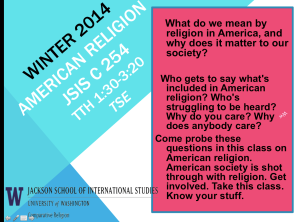
A major part of the first three months of this postdoctoral fellowship (January to March) has been, is, and will be devoted to teaching my course, JSIS C 254, on American religion. Depending on who is speaking, friends and colleagues with whom I have discussed this course tell me that I am perhaps the most fortunate and/or blessed of new teachers: the students participate without my prompting, seek me out during office hours, and genuinely care about the material. We have successfully journeyed through the development of an Anglo-Saxon Protestant consensus in early American religion and explored the rise of a liberal consensus in twentieth-century America. We have also just recently completed a unit on the politics of race in American religion and are now starting a final unit on American fundamentalism.

I will do a more comprehensive reflection on the course when it is completed in late March. What I want to do here is to sketch the ways that teaching this course has shaped my research. As I’ve stated in previous posts, the two objectives of my postdoctoral fellowship are 1) to develop my doctoral research into publications and 2) to embark on new postdoctoral research on younger generation Asian American and Asian Canadian Christians.

Much of what I’ve done over the last two months has helped me to clarify what exactly my research is about and what philosophical and theoretical trajectories I find myself engaging as I prepare for a round of empirical work for my postdoctoral project.

First, I am seeing much more clearly that my work on Asia-Pacific and Asian American Christians ties in intimately with what might be called the liberal tradition. As I’ve said before, liberalism is not the opposite of conservatism. It is instead a philosophical and theoretical tradition that emphasizes the formation of public overlapping consensuses while upholding both rational argument and self-interest. I developed an interest in how liberal ideologies become geographies during my doctoral research on Cantonese Protestants and my argument that they were upholding a theological form of secularity. I realize increasingly that the implication is that while conservative Cantonese Protestants decry the liberalism of mainline Protestants and secular civil society, they themselves have emphasized to me (rightly so!) that they themselves should be considered ‘liberal’ as well for their focus on rationality and self-interest.

In other words, I am clarifying the centrality of interrogating the liberal tradition in my ongoing research agenda. My teaching in American religion has clarified for me the trajectory of how an American consensus was formed and the contributions of Protestant theology to the formation of a liberal tradition in America, one that has come to tentatively also include Catholics and Jews, as Will Herberg would say. On the same token, my recent readings in Asian American studies have also emphasized the connections among religion, racial formations, and liberalism. In the forthcoming issue of Amerasia Journal (40, vol. 1), I reviewed Ellen Wu’s phenomenal history of Chinese and Japanese American collaborations in the making of the model minority stereotype, The Color of Success: Asian Americans and the Origins of the Model Minority Myth. (This review will get its own post when it is out.) The major theme that I picked up in Wu’s history emphasized how American liberal ideologies produced a politics of assimilation, repeatedly framing issues in Chinese and Japanese Americans around integration issues. While Wu doesn’t talk much about religion, her book, combined with my own teaching on liberalism in American religion, brought clarity as I authored the encyclopedia entry on ‘Christianity’ for the SAGE/AAAS Asian American Society Encyclopedia, which I am pleased to announce has been accepted by the editors. My entry focuses on how both Protestant and Catholic threads in Asian American Christianity revolved around the question of assimilation for Asian Americans and that this is why the place of Christianity in Asian American communities is often so contested. Finally, the work around the Asian American open letter to the evangelical church has helped me to see the centrality of liberal ideologies in Asian American evangelical communities and has made me wonder openly about how such liberalism has managed to produce a ‘private consensus’ in American religion.

To the end of exploring the connections between liberalism and Asian American religion more thoroughly, I have a set of publications on which I am actively working that will be sent out over the course of this year. These articles, as well as a possible book manuscript, will develop my doctoral work on Cantonese Protestants and my postdoctoral work on younger generation Asian North American Christians around these theoretical formulations. This is possible because as a geographer, I am no stranger to dealing with what might be called grounded liberalisms. Indeed, when David Harvey published Social Justice and the City in 1973, he meant it to be a philosophical intervention that revealed the grounding of moral philosophies in concrete urban spaces, and he spends much of the book dealing with the insufficiencies of Rawlsian liberalism in urban geography, so much that he has to propose a Marxist way forward. By the time that David Livingstone wrote The Geographical Tradition in 1993, the notion that philosophy and theory were integral to any geographical research project was already the common consensus in the discipline. I’ll be using the resources from my home discipline, then, to address these philosophical concerns in publications that I will submit this year.

Second, I am finally coming to admit that while I have billed my research as focusing on Protestants, the truth is that both my doctoral and post-doctoral research is as ecumenical as it is evangelical, for Roman Catholics are inextricable from the Protestant story. It is thus more fair to say that I research Asia-Pacific and Asian American Christians for the simple fact that I have always included both Protestants and Catholics in my story, just as I have always sought to integrate liberal, liberationist, and evangelical voices in both my research and in my networks. In my doctoral research, I found that Catholicism was more integral to my Protestant story than I had anticipated. My research in the San Francisco Bay Area suggested that the push by some mainline Cantonese Protestants to pursue social justice as an ecumenical effort in fact stemmed from the success of the very successful ministry of the Paulist Fathers at Old St. Mary’s Cathedral in San Francisco’s Chinatown. While Chinese American Catholics and Protestants went quite separate ways after the 1970s in North America, that was precisely the time that they were being drawn together in Hong Kong. Democracy movements as from the Golden Jubilee Incident in the 1970s, the Tiananmen Incident in 1989, and the post-1997 protests for universal suffrage, migrant and labour rights, and religious freedom were all ecumenical efforts. Such ecumenism is calling me to revisit my data for the presence of Catholics throughout my research in San Francisco, Vancouver, and Hong Kong. Indeed, I included research interviews with Catholics in San Francisco, Vancouver, and Hong Kong; at what was perhaps one of the highest points of my research, I was allowed to interview Joseph Cardinal Zen twice in Hong Kong! As it is, my research has never been exclusive to Protestants. Catholics show up in my dissertation. They need to be explicit in my research.

I see the theological interests that can be derived from this empirical research as closely connected with the philosophical concerns that come from my discussion of liberalism. As I showed in my grounded theologies piece in Progress in Human Geography, theological thinkers (both Protestant and Catholic, and beyond the purview of Christianity, by all means!) can be read as honorary geographers because they are primarily interested in how theologies can be grounded in space. My postdoctoral research is causing me to revisit a variety of Protestant and Catholic thinkers from across the theological and ideological spectra to erect a theoretical framework that is fair to the empirical findings.

What you can expect, then, is that there will be a series of publications around my more ecumenical findings from my doctoral project, as well as a commitment to discovering ecumenical collaborations and contestations in my postdoctoral work. I suspect that most of my readers think that I focus exclusively on Asian American conservatives. They would not be wrong to think that social conservatism and the grounded theologies of family values politics takes up a significant chunk of my research agenda, but I expect that they will be surprised as I start publishing on ecumenical partnerships and progressive democratic movements this year. In addition, my emphasis on my research focusing on both Catholics and Protestants will mean that there may be some Catholic publication surprises in the works as well, including some publications targeted for Catholic Studies audiences.

Third, I am discovering that I need to publicly acknowledge my debts to what Cornel West calls ‘the black prophetic tradition.’ By the black prophetic tradition, I refer to a tradition of liberation critique and performative praxis that African American communities have contributed to the public rethinking of racialization in the public sphere. In many ways, these are personal debts that I have discussed when I have written about my personal history, especially my family’s ties to the African American patriarch, the Rev. Dr. J. Alfred Smith, Sr. However, I have seldom discussed how much I have long been influenced by the work of James Baldwin (since high school!), so much to the point that I am in fact teaching Baldwin’s The Fire Next Time in American religion as a book that brings together the poles of Martin Luther King, Jr. and Malcolm X in the black prophetic tradition, much as the academic corpus of James Cone does. In addition, with the emergence of theologians of race like Brian Bantum, J. Kameron Carter, and Willie Jennings, it is much easier to theorize connections between secularization and the geographical politics of race in modernity.

My thinking on race and religion again ties back with my ecumenical interests and my concerns with liberalism. If grounded liberalisms and theologies contribute to placemaking, then in the same ways do racialization and the myriad struggles for racial justice also produce geographies. These spaces have been documented by geographers, and I plan to emphasize that more strongly in my work. Again, this realization about the centrality of race to my work will show up in publications, both in theoretical contributions in my reading of key texts on race in a geographical way as well as in empirical explorations of how my doctoral and postdoctoral projects highlight ongoing problems of orientalization, including self-orientalization.
jkhtse_salmonsliders

All this is to say that my plate is quite full, and I am quite happy about that. I will be presenting some of this emerging work at various conferences this year, and I will use this blog, as usual, to make announcements about those. Publications are also in the works, as well as teaching syllabi. I look forward to the work ahead of me during this postdoctoral fellowship, and I hope that my colleagues, my readers, and indeed the various publics to which my work may have relevance will find my scholarship helpful and constructive.
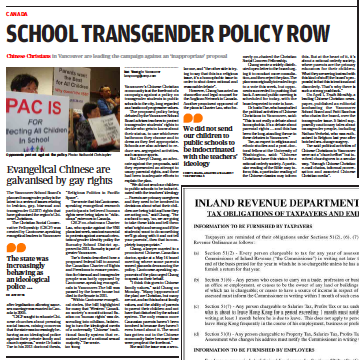
Book Review: Religious Studies Review: Justin Wilford (2012), Sacred Subdivisions: The Postsuburban Transformation of American Evangelicalism

I am pleased to announce that Religious Studies Review has published the second of my reviews of Justin Wilford’s wonderful 2012 book on Orange County’s Saddleback Church, Sacred Subdivisions: The Postsuburban Transformation of American Evangelicalism (New York University Press).

9a3e7-wilford

Over the last year, I was asked by three journals to write reviews of this book. The first was published last September 2013 in the AAG Review of Books. This piece in Religious Studies Review is the second one. The third will be part of a review forum on the book in Social and Cultural Geography and will focus on the usefulness of Wilford’s text for the Asian American evangelical activism that took place in September and October 2013. [Note: while I initially wrote a draft of that third review before the activism took place, I substantially rewrote it afterwards in order to observe how useful Wilford’s study was in the interplay of academia and activism.] The editors of the various journals understand that I have placed reviews that explore different angles of Wilford’s book, and in the spirit of transparency, I have sent copies of the different reviews to Religious Studies Review, the AAG Review of Books, and Tristan Sturm (who is organizing the SCG forum) to guard against self-plagiarism.

This present review in Religious Studies Review presents Wilford’s book to a religious studies audience. It is a very short review–what Religious Studies Review calls more of a ‘note’–that observes that Wilford has made a substantial geographical contribution to the social scientific study of religion. While geographers have often not been part of the broader conversation in the social science of religion, this book begins a conversation that I hope will continue to make inroads into a conversation of which we should be an integral part. In particular, I observe that Wilford’s ingenious examination of Saddleback’s usage of secular space for theological purposes subverts the religious studies obsession with defining ‘religion’ and calls religious studies scholars to closer analyses of how theologies are grounded in space.

For those who are wondering still if they should get this book, my answer in this review is a definitive yes. Following my thoughts in the review, I have discovered that Wilford’s text is an excellent starting place to talk about current work in geographies of religion. When I am asked at conferences about geographies of religion (i.e. where my work on Cantonese Protestant and younger-generation Asian American and Asian Canadian engagements with publics fits in the discipline), I often refer my interlocutors to the New York University Press book stands to pick up this book. As it was recently observed at an ‘Author Meets the Critics’ session for Sacred Subdivisions at the Association of American Geographers, books like Wilford’s remind geographers that publishing monographs would be helpful to advancing human geography as a discipline in interdisciplinary conversations. I am happy to endorse this text as a fruitful beginning point for such engagements, and I look forward to the conversations that it will generate both within and without geography.