Association of American Geographers, Tampa, FL (8-12 April 2014)

I am writing from Tampa, Florida to talk about the national conference that I am attending. As usual, I am at the Annual Meeting of the Association of American Geographers. There’s a lot going on here in geographies of religion (check out our specialty group’s newsletter) – the field seems to be growing, though many of my colleagues couldn’t attend this year! – and I will also be checking out sessions on migration, Asian geographies, urban studies, and other things, in addition to meeting colleagues and catching up with old ones.

I am presenting in a session this afternoon (Tuesday, 8 April) on Critical Geographies of Religion. My paper is titled The Civil Human Rights Front: religion and radical democracy in post-handover Hong Kong and features a lot of the field work I did among progressive Christian groups in Hong Kong in 2012. Here’s the abstract:

After Hong Kong returned to Chinese sovereignty in 1997, the Special Administrative Region has seen the emergence of calls for universal suffrage, the preservation of civil liberties, and solidarity with the materially marginalized in Hong Kong’s civil society.  In one moment of collective solidarity, an umbrella group called the Civil Human Rights Front launched a protest against anti-sedition legislation based on Basic Law’s Article 23, a law whose alleged threats to free speech drove some 500,000 Hongkongers to the streets on 1 July 2003.  This paper analyzes the radical democrats who have been key to such political placemaking activities in Hong Kong, contesting the city’s policy landscape through physical demonstrations.  It argues that while a wide swath of Hong Kong’s Catholics and Protestants have historically been allied with the state establishment both under British and Chinese sovereignty, the emergence of radical democratic groups like the Civil Human Rights Front have been driven largely by Catholic and Protestant Christians who emphasize a separation of church governance from the state.  While the separation of church and state has often lent itself in other contexts to more conservative politics, this spatial schematic has led these radical democratic activists, their churches, and their solidarity groups to contest the modus operandi of Chinese sovereignty.  This is thus a contribution to critical geographies of religion, for it shows the potential power of religious movements to critique the practices of the state in order to imagine more socially just cities.

There are two parts to this session. I am the first paper on the first part, which promises to be an engaging discussion on religion, politics, and the public sphere. Find us in Room 17 on the First Floor of the Tampa Convention Center. The first session is from 2:40 PM – 4:20 PM. The second session runs from 4:40 PM – 6:20 PM.

Tomorrow (Wednesday, 9 April), political geographer John Agnew will be giving our Geography of Religions and Belief Systems (GORABS) Annual Lecture. His lecture is titled The Popes and the city of Rome during Fascism, 1922-1943. Here’s the abstract:

It has become popular in recent years to see the Fascist years in Italy as reflecting the relatively successful transformation of Italian society at the behest of its Fascist rulers. This reflects both the rehabilitation of Fascism in contemporary Italy and the “cultural turn” in Italian historiography that has tended to emphasize the “making” of Fascist selves and other markers, such as the makeover of many urban monumental spaces, as measures of the regime’s success. My purpose is to disrupt this emerging consensus, alongside other commentators I hasten to add, by pointing how much the Fascist regime had to collaborate with other powers, not least the Catholic Church, and was often outflanked by them in its designs, most notably in efforts at making over the city of Rome as its showcase capital.

We want as many people as we can to attend, and we hope to see many of your there! Find us in Room 23 of the First Floor of the Tampa Convention Center, Wednesday, 9 April, 10 AM – 11:40 AM.

Please also join us for our business meeting. That is scheduled for Thursday, 10 April, from 7:30 PM – 8:30 PM in Room 9, Tampa Convention Center, First Floor. I will be chairing, and if you want the meeting agenda, please email me.

I look forward to a lot of collegial interaction this week, and I am anticipating learning a lot! It’s great to be with people in my home discipline, and I hope I have more to bring this year from all of my interdisciplinary journeying.

Vancouver Sun: The struggles of affluent East Asian youth in Canada

In this post, I’ll discuss the Vancouver Sun‘s publication of some of the findings in a paper that Johanna Waters and I co-authored in Global Networks. I’ve written about the actual article here, and that’s where I discuss our experimental methodology and some of our key findings.

I like the article that Douglas Todd has written about our piece. This wasn’t something that I set him up to do; in fact, I didn’t even know that he was working on it until he emailed me telling me that it was in that very day’s paper and that he had already gotten feedback on it. As I said, I have been on vacation, so I hadn’t seen a Vancouver Sun where I was vacationing and am relying on the online copy.

The article rightly situates our piece in a longer literature that includes pioneering work done by my supervisor, David Ley, as well as Audrey Kobayashi and Elaine Ho (who incidentally edited the first article I ever published). As those who have read this literature will know, our piece takes seriously this recent literature’s attention to the ’emotional turn’ in cultural geography, an approach to studying space and place that takes seriously how perceptions and constructions of geographies are constituted by emotions. In particular, our piece focuses on the emotional geographies of young people transitioning to adulthood between Hong Kong and Vancouver. Todd reads our two empirical sections fairly and carefully. First, the young people we interviewed described their experience of their family’s supervisory practices as ‘sporadic’ and ‘fragmented’ because while they were grounded in Vancouver, their families often lived at a geographical distance. Second, the young people said that they felt attached to Vancouver, whereas Hong Kong often felt like a ‘hostile’ environment where they didn’t have friends and where they could imagine work hours being unbearable. I am happy with the way that Todd has read our article.

What I’d like to reflect on here is the relationship between academia and journalism. In the past few weeks, I’ve been thinking quite a bit about this, especially because Douglas Todd’s work and my work are starting to have points of convergence and because Sarah Pulliam Bailey has been doing so well covering the Asian American evangelical activism of which I have been a part. As I said when Todd first interviewed me, I felt that the relationship that we were developing was collegial, and I continue to feel that way. To work with journalists is not to seek publicity. It is to be committed to an academia that engages the public sphere and that demonstrates that academic freedom is vital to our democratic discourse. Working with my colleagues in journalism, I’ve gained a greater appreciation of why the press needs to be free, why it’s important that private entities should not control the press’s discourse (this includes when they read my work), and how the academic conversation is enriched when more public voices are brought into the picture.

For this article, I’m glad that Todd decided to give the article his own read without consulting me. I got a sense of why this research was important to our public discourse. Jo Waters and I had our angle, of course, and that was that our public discourse should not simply assume that children growing up in transnational social fields necessarily desire to live transnational lifestyles. But with Todd bringing it to the public sphere, I’ve been impressed by how important it is that this message gets out, especially in our public conversations about migration and citizenship. I write with gratefulness for Todd’s journalistic craft (and for Bailey’s, for that matter). They are teaching me so much about their trade and how we can work together between our different guilds, and I am grateful for their patience and for their collegiality.

UPDATE: After writing this post, I had the opportunity to read some of the comments about our research. I’m thankful for the many people who resonated, and I’m also grateful for those who posted critical comments that might help us refine our future endeavours. Two comments stick out for me, and I’d like to address them here. First, there is the observation that we ‘forgot’ to interview migrants from the People’s Republic of China (PRC), as the ‘astronaut’ phenomenon encompasses more than Hongkongers and there are Hongkongers who work in major cities on the mainland. Second, some noted that this research describes a long phenomenon that can be observed since 1990 (and perhaps before).

Allow me to respond to both, as both can serve as a teaching moment for what we do in academia.

Both Jo Waters and I focused on Hongkongers in our respective projects. This was a practical consideration, as we wanted to limit ourselves to one segment of the Chinese diaspora, and as Weiqiang Lin notes, there are many other Chinese cosmopolitanisms to explore (such as, for Lin, Singapore’s ‘global schoolhouse’). Moreover, we have colleagues who do work on PRC migrants to Vancouver, such as Elaine Ho and Sin Yih Teo. Our study is thus not a comprehensive one that looks at every facet of Chinese transnationalism; instead, academics work with literatures–whole bodies of work–and our contribution is partly to the literature on Chinese transnationalism (as well as literatures on unconventional youth transitions to adulthood, emotional geographies, and cross-border movements more generally). In addition, studying Hongkongers allows for interesting comparative work with the PRC migrants, as well as the ability to unpack how Hongkongers perceive PRC migrants, a theme that was very much part of my master’s work (see this article also) and that has made it obliquely into my PhD work.

We are also aware of how dated the phenomenon that we are studying is. However, it’s partly because we’ve had such a long time to reflect, including the time elapsed between our two projects, that we’ve been able to make some of the claims we make. Again, this provides good comparative material for the new research emerging from our colleagues as well as a call to our fellow researchers to pay attention to the voices of young people in these transnational social fields.

BBC Heart and Soul: Chinese Christians in Vancouver

I am happy to announce the airing of a radio show episode in which I was honoured to participate. The show is the BBC’s Heart and Soul. The title of the episode is “Chinese Christians in Vancouver.

It is interesting that the episode is airing in the midst of Holy Week. The show host, Matt Wells, interviewed his participants over the Chinese New Year weekend in February. I am pleased to recognize friends, acquaintances, and even some research correspondents in the show, especially Stephen Cheung, the Rev. Simon Lee, Fr. Paul Chu, and Bill Chu.

The episode presents a fairly comprehensive view of Chinese Christianity in Vancouver. It tracks the growth of Chinese evangelicalism in Vancouver, drawing from early Chinese Canadian history to the growth of wealthier Hongkonger migrants to the current influx of people from the People’s Republic of China (PRC). It also compares Catholics and evangelicals, as well as generational and geopolitical divisions.

My contributions also ranged across these topics. The soundbite that Matt pulled from our fairly lengthy interview concentrated on the growth of second-generation English-speaking ministries within and without Chinese churches and their comparisons with the Southern Californian ‘silent exodus.’ I am happy to say that this serves as a preview into post-doctoral research I will be conducting next year.

It was also fascinating to see how Matt covered the other parts of my research through the other respondents’ voices. My master’s research into transnational Hongkonger evangelical churches was adequately covered by interviews with Cantonese communities and the comparisons between Protestant and Catholic voices. My PhD thesis on engagements with the public sphere, especially around sexuality issues and the provision of social services, was covered through interviews with Bill Chu, SUCCESS, and Vancouver Sun religion writer Douglas Todd. The work that I have been doing with Claire Dwyer and David Ley on the Highway to Heaven also made it into the program through the interview with Peace Evangelical Church.

As always, I need to provide a few caveats.

First, Matt always returns to China as the homeland for people in the Chinese diaspora. This needs to be more critically assessed. As Laurence Ma and Carolyn Cartier point out in their book The Chinese Diaspora, the issue of homeland is actually very complicated for people in the Chinese diaspora, as ideological claims that China is home don’t always match the material realities of multiple homelands.

Second, Matt seems to think that the church is the place where politics and social services emerge. I don’t blame him for assuming this, but the relationship between church and civil society for Chinese Christians in Vancouver is very complicated and needs to be more critically assessed. This is especially true for the sexuality issues, where it’s assumed that protests against sexual orientation discrimination bills, same-sex marriage, and anti-homophobic curricula emerge from congregations and are driven solely by a conservative theology. The reality is much more complicated, as religious values don’t always emanate from the church, but can be individually held and combined with secular factors.

Third, I worry about the near-portrayal of Chinese as homogeneously wealthy in Vancouver. While it is very true that wealthy Chinese migrants have transformed Vancouver’s urban landscape, the existence of organizations like SUCCESS that provide social services, employment help, and English-language and citizenship training indicates that there are economically disadvantaged Chinese people in Vancouver too. As a result, not all Chinese in Vancouver are of the same economic and political stripe, not even within church congregations.

However, overall, I am very pleased by the program.  I am especially happy to see that Matt has inferred with good insight the central issue here in Vancouver (though I am picky about the details): how does a multi-faceted Chinese evangelical population relate to Vancouver’s secular mainstream? To what extent is this about racialization vis-a-vis whiteness, and to what extent is it about religion? I am glad that Matt hasn’t provided definitive answers to these questions, but has framed them as starting points for further and deeper conversation and debate. In other words, Matt isn’t telling us what to think about Chinese Christians in Vancouver; he’s asking us to listen in and start a thoughtful conversation. Because of this, though I have caveats, I am happy to recommend this program as an introduction to the work that I have been doing in Vancouver. I would encourage listeners then to get in on the debate.

HKReporter: 天外有天 第19集 [The Sky Beyond the Sky, Ep. 19]- 快必、David、偉業、大曹 / 嘉賓: Justin [Fastbeat, David, Wai Yip, “Big Cho” / Guest: Justin]

I should have posted this earlier. On 5 April, at the tail end of my field work period in Hong Kong, I was interviewed by a bunch of people I had interviewed for my PhD project. They had all finished theological training at Chung Chi Divinity School (崇基學院神學院) in Sha Tin, Hong Kong and were mostly associated with a progressive church movement known as Narrow Road Church (路小教會). I made most of my interviewees, including the theologically and socially conservative ones, aware that I had this interview in my schedule, and most were fine with it, which speaks to a good level of civil discourse among Christians who might disagree otherwise on various issues.

I went to their studio at HK Reporter in Wan Chai, where they interviewed me for about an hour on my PhD work. We talked about practicing cultural geography, social conservatism among Chinese Christians, and the idea that Chinese Christian activism might take place along multiple subjectivities.

The interview is in Cantonese.  You can hear it here. (Note: there are two parts.)

The comments are fun to consider too. The most frequent comment was that my accent is Singaporean and that the hosts had mistaken me for a joksing (“flying bamboo”) North American Chinese. They need to read my post with Schema.

I am open to engaging people from a variety of perspectives about these interviews that I’ve done, and I am happy to be corrected or given alternative perspectives as I develop my thoughts and write them up.

Schema: Just Another Chinese Christian?

I recently had the privilege to contribute to Schema Magazine’s “But Where Are You Really From?” series. The series asks writers to write a real answer to a question series that’s posed to persons of various ethnic backgrounds in North America.

Q: Where are you from?

A: _______

Q: Oh, but where are you really from?

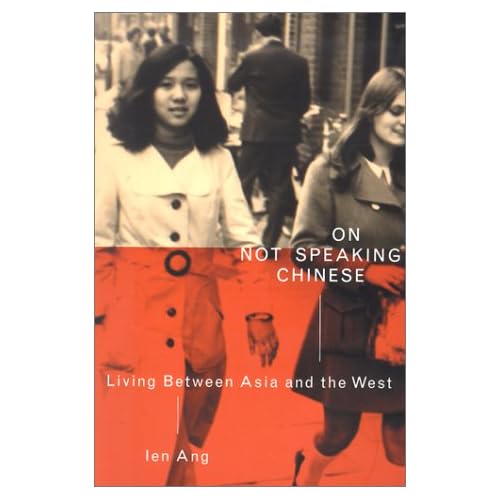
They don’t mention it, but this question series was made apparent in academia through the work of cultural studies scholar Ien Ang in a discussion of multiculturalism in On Not Speaking Chinese.

My answer was titled “Just Another Chinese Christian?”  In many ways, this is a popular positionality piece for the research I’ve been conducting for my doctorate.  In the piece, I deal with my upbringing in Northern California, the diversity of religious communities of which I’ve been a part, and the multiple understandings of Chineseness at play in my life.

The photo credit goes to my uncle in Hong Kong, Yung Wai Leung. Thanks, Goo Jeung!

Enjoy, and if you feel so called, contribute your own answer to Schema Magazine! The editors there, particularly Beth Hong and Sadiya Ansari, who both helped so much with the fine-tuning, are awesome!

PhD Field Work: Hong Kong Special Administrative Region

Greetings from Hong Kong!  I have been here since 22 February and will be here until April 17 doing field work for my PhD on Cantonese-speaking Christians, their conceptions of civil society, and their concrete networks and political practices.

During this time, I will be interested in any leads on the following:

  • How various churches and denominational bodies see their role in civil society
  • Christian involvement (both Protestant and Catholic) in the Chief Executive elections
  • Christian activism around “moral” issues, such as homosexuality and gambling
  • Christian work in poverty, both in areas of charity and social justice
  • Christians in post-80s movements
  • Christian discourse around democracy
  • Christian activism for and against the right to abode for migrant workers and China mothers
  • Christian work in education

I am interested in speaking with pastors, Christian organization leaders, and politicians.  I am also interested in gathering focus groups from the Christian laity.  If you would like to speak with me, or know of any people with whom I should speak, please contact me at jkhtse@interchange.ubc.ca.

Human Ethics Clearance

GREAT NEWS: my application to UBC’s Office of Research Services ethics committee has been approved!

This is one of the interesting things about doing research in North America.  Because of a long history of research with questionable ethics (largely within psychology), many North American universities have decided to screen any research involving human subjects.  This ranges from anything including simple interviews and surveys to more complicated things like deception to get information (which I do NOT engage in).  There’s a science version too for lab subjects and animal safety (which I also don’t do).  All of this gets put under an umbrella at UBC called the Behavioural Research Ethics Board.  I applied for clearance in human subjects.

My application was actually very simple because there weren’t too many ethical risks in my project to begin with.  My project is very simply talking to people in interviews and focus groups, observing people at churches and organizations, and stuff like that.  The key thing about this kind of research is that everything has to be up front, i.e. I have to let people know when I’m taping what they’re saying, I have to let them know that I’m a PhD Candidate doing research, and all the rest of that.  As a very simple formality and also a common courtesy, people that I tape also have to sign consent forms that say that they give “free, informed, and voluntary consent” and that they know what the project is about.  For the record, I use a digital voice recorder that records in mp3s made in Korea that I got from this tech shop in Causeway Bay in Hong Kong that just plugs into the USB port with a wire on my laptop.  I use the recordings as another note-taking device so that I don’t have to scribble down verbatim what everybody says, and I transcribe the interviews and make sure nobody besides me and the person being interviewed hears the interviews or looks at the transcriptions (confidentiality MATTERS!).  I always leave the recorder on the table out in the open, and I never tape secretly.  It’s really just about being forthright that I am an academic researcher interested in Cantonese evangelicals.  That’s not very hard to do, especially because I like the project so much!

The whole process only took about two weeks.  I was put under the category of minimal risk and assigned for expedited review.  This means that really, the project doesn’t have too many ethical risks.  The key thing is just to be honest that I’m doing research.  I think that’s what any decent person would do.

But yes, this means I’m cleared by UBC to do research.  Vancouver, San Francisco, and Hong Kong, here we come!

PhD Candidacy

I have some great news: on Friday, 28 January 2011, at 1 PM, I passed my PhD comprehensive exams.  This means that I advance to become what the department calls a PhD Candidate.  Many thanks to everyone who has kept me in their thoughts and prayers!

What does it all mean?

Well, first of all, what it doesn’t mean is that I already have a PhD.  So no, I am not Dr. Justin Tse yet, although the people who work at academic journals seem to like to address me that way (which is flattering, but terribly misleading!).  I’m projecting to finish in 2013, after which (hopefully) I’ll really have a PhD.

What it does mean is that I am now provisionally qualified to do research at the PhD level.  The provision is that in about a month, I need to submit a PhD dissertation proposal (a prospectus, as they’d put it in the States).  A dissertation is basically the integrated book that I need to write by the end of my PhD.  A dissertation proposal details the topic that I will write my PhD dissertation on, the fields that I will engage, and the approaches and methods I will use.  So that is forthcoming in March, and it will have something to do with Christians from Hong Kong in the Pacific region.  Details are being thought out as we speak!

Over the next month, my plan is to work on a few things.  First, there are several conference presentations that I want to squeeze out of a combination of these comprehensives and some work that I’ve been doing in collaboration with Dr. David Ley and Dr. Claire Dwyer on No. 5 Road in Richmond.  Second, there are some articles on religion, Asian Americans, and Hongkonger Christians that I want to see if I can draft this month.  Third, there is the dissertation proposal itself, but I’ve gotten used to thinking about this because of all the grant proposals I had to write from August to October 2010.

So it’s going to be a busy month, but what I can say is that the comprehensives have given me a bit of a boost in terms of knowing literatures on geographies of religion and secularism, Pacific geographies of migration and ethnicity, and urban geographies in the Asia-Pacific a lot better.  Now the task is to see if we can put legs on the literature.

Many thanks to everyone who has supported me thus far!  There’s still about two more years to go, and I’m excited for the real work that is to come!

Making a Cantonese-Christian Family: Quotidian Habits of Language and Background in a Transnational Hongkonger Church (Population, Space, and Place)

My first article is finally out in press.

It is entitled ‘Making a Cantonese-Christian family: quotidian habits of language and background in a transnational Hongkonger church.’ It is part of a special issue of Population, Space, and Place: A Journal of Population Geography on Migration and Everyday Matters: Materiality and Sociality.  Edited by Elaine Ho (Leeds) and Madeleine Hatfield (Royal Holloway, University of London), this issue represents an approach to geographies of migration from the ground up.  We investigate everyday lives and quotidian geographies: how is space materially and socially created by people who have moved from one place to another?

My contribution tackles geographies of everyday life in both the religious dimension and the Hong Kong-Vancouver migration network.  This is based on my MA research, which took place in a transnational Hongkonger church in Metro Vancouver I have anonymised as St. Matthew’s Church.

This paper looks at how St. Matthew’s Church became and is continually reinforced as a transnational Hongkonger church.  For the examination of everyday lives, I use the work of Michel de Certeau in The Practice of Everyday Life as an heuristic, differentiating between strategies in which ordinary citizens consciously plot political resistance and tactics in which people unconsciously and unreflectively use everyday habits to prop up their lifeworlds.  As I suggest in the paper, most of what goes into making a Cantonese-Christian family are everyday habits (de Certeau’s tactics) that are often subtle, unconscious, seemingly insignificant, and unreflected upon, but which turn out to be politically constructive at the end of the day. By advancing the geography of religion, I also am working within the boundaries of new cultural geography in which James Duncan famously showed in The City as Text that geographical landscapes, networks, and spaces don’t just exist superorganically in some abstract space above us, but are in fact constructed politically over time.

Here’s the abstract:

Studies of the Hong Kong-Vancouver transnational migration network seldom pay close attention to religion in the everyday lives of Hongkonger migrants. Based on 9 months of ethnographic fieldwork at St. Matthew’s Church, a Hong Kong church in Metro Vancouver, this paper examines the tacit assumptions and taken-for-granted quotidian practices through which a Hongkonger church is made. I argue that St. Matthew’s Church has been constructed as a Hong Kong Cantonese-Christian family space through the everyday use of language and invocations of a common educational background. This argument extends the literature on Hongkonger migration to Metro Vancouver by grounding it in a religious site whose intersections with Hong Kong migration to Vancouver consolidates the church as a religious mission with a specifically Hongkonger migration narrative. This consolidation is problematised as I show that contestations in church life by migrants from the People’s Republic of China over language and asymmetrical educational backgrounds both reinforce and challenge the church as a Hongkonger congregation. Through an examination of these everyday interactions at St. Matthew’s Church, this paper advances the geography of religion as I demonstrate that specific geographical narratives and networks shape quotidian practices in religious sites.

The paper is available on Wiley-Blackwell’s Early View.  Inquiries regarding the paper can be directed to: jkhtse@interchange.ubc.ca or tse.justo@gmail.com.