ANARCS Steering Committee

Today I was invited to become–and accepted–membership on the Steering Committee of the Asian North American Religions, Culture, and Society (ANARCS) Group of the American Academy of Religion (AAR).  It is an honour and a pleasure to have been invited by such a great group of friends.  The duties of Steering Committee members is to design a call for papers for forthcoming AAR conferences, to vet abstracts and panel proposals, and to make sure that presenters actually write their papers and have a great time presenting them at panels and sessions that we sponsor.  Accordingly, we are influential in shaping what ANARCS will be doing and hope to have some influence on the development of the field of Asian North American religious studies as a whole.

I am very excited to be part of this.  During this year’s AAR, there were three ANARCS-sponsored sessions: 1) E Pluribus Pluribus: Transnational Hinduism in North America, 2) Asian North American “conservative” Christian communities, masculinities, and gender issues (in which I presented), and 3) Boundary Crossings: new directions in Asian American theologies (over which I presided–thanks, Sharon Suh, for the opportunity!).  The quality of the papers was very high, but what struck me even more was the abundance of younger, emerging scholars in the field who are pushing the boundaries of what should be studied as part of Asian American religious studies.  My sense from this year’s discussion was that there is a lot of emerging work on the intersection of Asian American religions and sexuality–an intersection that is similarly coming to fruition in geographies of religion, I might add!–and that there is much more attention being paid to critical theory among the younger scholars.  There was also a sense of these younger scholars being mentored by more senior faculty discussants on the panels who were very approachable for questions and constructive feedback after the sessions as well.

I am excited to be part of this burgeoning field that crosses American ethnic studies and religious studies.  Many thanks to ANARCS for the opportunity to serve in the Steering Committee, and I look forward to working with everyone.

CFP: AAAS 2013: Empire and Asian American Religions

Call for Papers
Empire and Asian American Religions: approaching religion in ethnic studies
Association of Asian American Studies 2013: Seattle

Religion has a contested place in Asian American studies, especially as it pertains to themes of empire.  The work of American missionaries in their attempts to “civilize” the “inassimilable alien Oriental” is continuously critiqued as having enacted narratives of white supremacist racism under the guise of benevolent activity.  Moreover, Asian American religion scholars such as Jane Naomi Iwamura (2011) and Joseph Cheah (2011) have demonstrated that appropriations of Asian American religions in American popular culture have perpetuated ideologies of orientalization toward Asian American religious practitioners.  Indeed, a recent president of the American Academy of Religion, Kwok Pui-lan (2012)—herself an Asian American—laments the complicity of religious studies with imperializing projects.

However, as recent work in Asian American religious studies, including the publication of a Pew Forum report on Asian American religions, has shown, religion is an inescapable part of many Asian American communities.  This paper session attempts to collect papers that span this seeming paradox in an attempt to chart a way forward in approaches to religion in Asian American studies.  How are religions in Asian American studies to be studied, given the imperial context in which many approaches have been complicit?  Will the approaches differ between progressive traditions and conservative ideologies?  Are religions inescapably imperialistic, or do they, as Kwok Pui-lan suggests, hold within themselves keys to imagining an alternative world where the marginalized can speak back?

We welcome both theoretical papers and empirical studies.  Suggested topics include:

  • Theoretical approaches to religion in Asian American studies
  • Religion and discourses of the inassimilable alien
  • Religion and white supremacy
  • Religion and anti-racist politics
  • Religion and post-colonial imaginings
  • The role of religion in reinforcing and/or challenging orientalizing discourses
  • Progressive religious traditions and their relation to empire
  • Conservative religious ideologies and their relation to empire

Please submit all paper proposals to Justin K.H. Tse at tse.justo@gmail.com no later than October 20, 2012 for consideration.

Book Review: Issei Buddhism in the Americas

Image

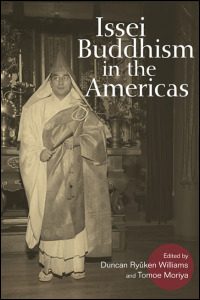
I recently had the privilege of reviewing Duncan Ryuken Williams and Tomoe Moriya’s edited volume, Issei Buddhism in the Americas (2010) for the Journal of Asian American Studies. It’s out in the most recent issue (15.2).

I liked the book quite a bit, and I think it shows in the review. I was really struck by how much of it was done in relation to Asian American Christianity and was very intrigued by its call to ramp up Buddhist studies for a more comprehensive contribution to religious studies, Asian American studies, and Asian studies. It features some very strong essays that serve as great introductions to various scholars in Asian American Buddhist studies and presents the key sources of historic first-generation Japanese American forms of Buddhist practice and teaching very well. I also appreciated them reaching out to Latin American and Canadian contexts as well in an attempt to paint a fuller picture of the Americas.

Thank you, JAAS, for inviting me to write this review. I want to thank Cindy Wu, the book reviews editor, for managing the review process so well. I also thank Rudy Busto (UC Santa Barbara) and Sharon Suh (Seattle University) for their very encouraging and constructive comments on earlier drafts of the piece and for being such inspiring mentors as the field of Asian North American religious studies continues to grow.

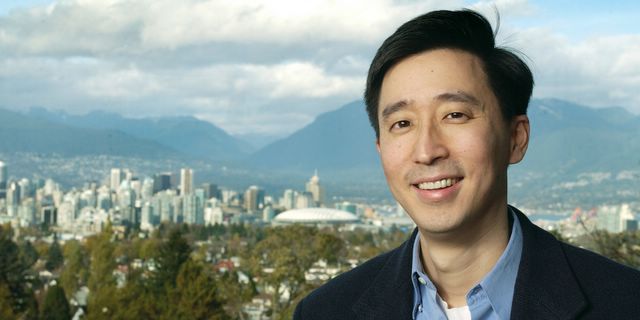
Hearing a different kind of evangelical: Pastor Ken Shigematsu, Tenth Church Vancouver (Ricepaper 16.3)

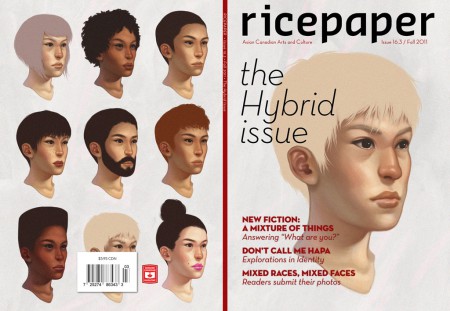
Ricepaper Magazine, an Asian Canadian arts and culture magazine, has just put out their new 16.3 issue, The Hybrid Issue!   It features articles on how Asian Canadians negotiate the diversities in their own experiences as well as in their creative output.  Other articles in this issue include excerpts from two plays that explore identity intersections, a creative fiction piece about hybridities at a hot dog stand, a critical piece on Canadian immigration policy, profiles of community authors such as C.E. Gatchalian and Haruko Okano, a reflection on why being called “hapa” isn’t so good, and photos of people of hybrid upbringings.

I contributed a profile to this issue entitled “Hearing a Different Kind of Evangelical” (p. 54-57). The piece centers on Pastor Ken Shigematsu, the senior pastor of Tenth Church Vancouver and the one-time co-planter of Newsong Church with Dave Gibbons in Southern California.  In the piece, I try to “hear” Ken as an “evangelical” and as an “Asian Canadian.”  These two terms are badly misunderstood in popular circles (especially “evangelical”–I cannot begin to count the ways!), and what Ken offers is a chance for us to hear these terms afresh, to see that both terms–at least for Ken and the good folks at Tenth Church–foster diversity, inclusivity, and hybridity across ethnic, class, and even religious lines, even if these terms previously stood for exactly the opposite in our minds.

Tenth Church has a fantastic section of news clippings about the church. There’s plenty there about their policy interactions with the city, the way they’re perceived in the neighbourhoods they are in (Mount Pleasant and Kitsilano), and a very interesting Asian Canadian spin with Tenth on the Asian American “silent exodus” of second-generation Asian Canadian Christians from immigrant churches.

You can get a copy of Ricepaper at any Chapters in the Lower Mainland, as well as most local bookstores.  There’s also a subscription service!  Get it: it’s our Asian Canadian arts and culture mag, and it really is all about promoting what happens in our community!

American Academy of Religion + Society of Biblical Literature, San Francisco, CA, 19-22 November 2011

This year, I am presenting two papers at the joint meeting of the American Academy of Religion and the Society of Biblical Literature. It will take place from 19-22 November 2011 in San Francisco, CA at the Moscone Center and surrounding hotels.

Here are my abstracts.

For the American Academy of Religion:
Sunday, 20 September 2011, 3:00-4:30 PM.
Sponsored by the Asian North American Religion, Culture, and Society, our theme is: Evangelism, Education, and Leadership: Transnational Strategies and Local Adaptations in Asian North American Religious Communities.
Drawing from case studies of Evangelical Diasporic Chinese in Vancouver, Indo-Caribbean Hindu practices in New York City, and Japanese and European American Buddhists in Seattle, the papers in this interdisciplinary panel provide a comparative framework for considering ways that local Asian North American religious communities utilize cross-cultural and transnational strategies and frameworks in adapting to changing circumstances and traversing divisions shaped by generational, migration, ethnic, racial, and national boundaries. The papers also consider new challenges and tensions created by these strategies.

Courtney T. Goto, Boston University, Presiding
Russell Jeung, San Francisco State University, Discussant

Evangelism, Eternity, and the Everyday: Ambivalent Reconciliation in a Chinese Canadian Christian Church in Metro Vancouver, BC
Christian evangelism and proselytism has often been seen as a problematic form of religious imposition. Recent scholarship in religious studies, however, has been more ambivalent toward proselytization as they are caught between the tension of allowing religious duty while cognizant of colonial advances (Han 2009; Casanova 2010; Sturm and Dittmer 2010; Megoran 2010). This paper examines the grounded practice of Christian evangelism in a transnational Hongkonger church in Metro Vancouver in British Columbia through a nine-month congregational ethnography in 2008 that included 38 semi-structured interviews with 40 participants. First, evangelism is articulated as a strategy for eternal family togetherness that has created a demand for transnational speakers from Hong Kong at evangelistic meetings as well as a debate over the nature of second-generation English-speaking ministries. Second, Hongkongers practicing evangelism have unexpectedly found that this Christian practice breaks down everyday geopolitical barriers between themselves and new migrants from the People’s Republic of China (PRC). This paper thus portrays Christian proselytization as an ambivalent practice of intra-family and geopolitical reconciliation within a Chinese Canadian congregational context.

Other presentations in this session:
Michele Verma, Rice University
How Transnational Education Shapes Indo-Caribbean Hindu Traditions in the United States

Sharon Suh, Seattle University
New Euro-American Dharma Protectors: Jodoshinshu in Transition

For the Society of Biblical Literature:
Saturday, 19 November 2011, 5:30-7:00 PM, Hilton Hotel, Van Ness Room
Sponsored by the Institute for the Study of Asian American Christianity (ISAAC), the session is entitled: ISAAC Fifth Anniversary Celebration.
As we prepare for the next five years of advocacy for the study of Asian American Christianity, we would like pause for a moment to reflect on our work. Please join us for our Fifth Anniversary Celebration in San Francisco two Saturdays from now.

America, Return to God? Chinese American Christian conservatives and Asian American Christianity
America, Return to God was a publication released by the Great Commission Center International in the late 2000s. Its premise was that the declining morality of American civil society, mainly in sexual practice, will lead to eschatological disaster for the nation. While praised by some evangelical leaders, it also garnered attention both in the secular press and among some Christians as what was perceived as a homophobic publication. What is seldom interrogated, however, is America, Return to God as a Chinese Christian missionary publication in the tradition of the Lausanne Movement. Such an analysis reveals a dilemma in Asian American Christianity by problematizing the conservative-progressive divide in these circles. This paper fills that gap in the literature. It argues that America, Return to God should be read as a Chinese evangelical compilation of American Christian articles on public morality as part of an effort to fulfill the Great Commission with social and cultural awareness of American issues. First, I perform a critical reading of America, Return to God, highlighting the theology of the nation at work in its articles. Second, I demonstrate that this publication is part of a Chinese Christian missionary effort on the part of its founder, Christian evangelical patriarch Thomas Wang, underscoring the integral role of Chinese Christians to global evangelical movements. Third, I reveal that America, Return to God presents Asian American Christianity with the dilemma of whether or not to allow conservative evangelical voices to speak for Asian American evangelicals. This paper advances Asian American Christian studies by beginning a conversation on how Asian American Christians have engaged America with their own particular theology of the nation.

Other presentations in this session:
Tim Tseng, ISAAC
ISAAC’s First Five Years

Book Announcements:
Young Lee Hertig, Fuller Theological Seminary, Mirrored Reflections: Reframing Biblical Characters (Wipf and Stock, 2010)

Russell Yee, Graduate Theological Union, Worship on the Way: Exploring Asian North American Christian Experience (Judson Press, 2012)

I welcome engagement on both of these papers and can be reached at jkhtse@interchange.ubc.ca.
APARRI 2011

The 2011 Annual Meeting of the Asian Pacific American Religions Research Initiative

APARRI
Call for Papers

Here and There: Race, Religion, Law and Immigration

Dates:  August 3–5, 2011
McCormick Theological Seminary
Chicago, IL

APARRI is a community advancing the interdisciplinary study of Asian Pacific Americans and their religions. Through conferences, mentoring, and collaboration, APARRI promotes the professional development of scholars and the emerging field of Asian Pacific American religious studies. The APARRI conference began in 2000 among a group of doctoral students and early-career scholars of religion and theology who sought to develop a community of mutual support for the development of interdisciplinary scholarship on Asian Pacific American religion.  The conference continues this cross-disciplinary work by organizing concurrent sessions. Presenters are encouraged to share their research and works-in-progress with other APARRI participants by organizing panels, presenting papers, and/or by structuring small group dialogue sessions on an important topic of inquiry in the study of Asian North American and Pacific Island religions. Selected papers/sessions will be scheduled during the concurrent panels.

Entitled “Here and There: Race, Religion, Law and Immigration” the 2011 conference will be held August 3–5 on the campus of McCormick Theological Seminary in Chicago, IL.  The conference will feature a plenary as well as concurrent sessions that showcase research-in-progress. Additionally sessions focusing on professionalization (“Research and Writing: Staying Productive and Sane” and “I got the Job: Now What?”) will be available for students and faculty.

Debates around immigration have become increasingly fraught in the U.S. and abroad.  The impact of these debates has affected the lives of Asian Americans in predictable and unexpected ways, especially when considerations about citizenship take into account religion, law, and race.  The 2011 Annual Meeting of the Asian Pacific American Religions Research Initiative (APARRI) will explore the nexus of race, religion, law, and immigration through papers, working groups, and experimental keywords sessions.  Among the questions the meeting will consider are: How have changes in legal, civic, and cultural understandings of religion and race affected the formation of immigration policies in the U.S. and in other nations? What role have Asian American religious communities and traditions played in the fight for the rights of immigrants? How have race relations among Asian Americans and other racial and ethnic groups affected attitudes about immigration policies and religious affiliations?  What discourses about social justice have Asian American religious communities developed?  We invite working papers that will address these and related questions.

Deadline for Submissions:  June 1, 2011.
Email submissions to:  We encourage work in multiple and diverse religious contexts. Proposals should be sent by e-mail to Joe Cheah at jpcheah@aol.com
Acceptances will be sent out by June 15, 2011.

Winter/Spring 2010: Update on Ph.D. Happenings

The Winter 2010 term has drawn to a close, so much so that it’s a shame to call it the Winter Term all the way into late April!  The Spring 2010 term is just beginning.  It is time for an update.

I have taken two directed readings courses this term.  The first was with Henry Yu (UBC History) on Asian Americans in Global Context.  The course began with the classic texts of the Asian American movement: Sucheng Chan’s Asian Americans: An Interpretive History and Ron Takaki’s Strangers from a Distant Shore: A History of Asian Americans.  The course focused on an intellectual history of the Asian American/ethnic studies political movement.  It then branched out into the historical periods in which an Asian identity in American, Canadian, and Australian contexts were formed: in the labour migrations in the classical capitalist economies of the nineteenth-century, the political context of Cold War constructions of “Good Asians” and “Bad Asians,” and in the contemporary setting where Asians are regarded as the “model minority.”  We also explored issues such as gender, sexuality, and religion.  The final product of this course is a course syllabus that we design for undergraduates to introduce the issues of ethnic studies and Asian Americans.  My syllabus begins with an exploration of personal positionality, enters the issues by framing a narrative of the Asian American experience, and then tinkers with that narrative by exploring Asian bodies in colonial and post-colonial spaces.

The second course was with David Ley (UBC Geography) on Geographies of Religion, Secularism, and Social Theory.  The course was designed around my writing of a paper that would explore, critique, and provide new entry points into the geography of religion.  The paper has evolved into an exploration of two ways the geography of religion has been done: first, through the Berkeley school of cultural geography’s emphasis on the imprint of religion on the cultural landscape and second, through the new cultural geography’s critique of the Berkeley school and re-emphasis on the practices that make sacred spaces sacred.  I also engage thinkers on secularity such as John Milbank, Charles Taylor, and Talal Asad and introduce the notion of a grounded theology to guide ethnographic work on geographies of religion and their intersections with fields that don’t look sacred at first glance.

These two courses are leading into what looks to be a very busy (but productive!) spring and summer 2010.  I have just finished a very successful conference presentation and paper presentation in Washington DC and ten days of intensive field work on the Highway to Heaven (see my previous post) and will be finishing these papers that I’ve just mentioned.  My spring review with my committee for my first year of the Ph.D. will be in mid-May.  I have taken three courses thus far: 1) cities in the Asia-Pacific region, 2) the politics of Asian America and Asian Canada, and 3) geographies of religion, secularism, and social theory.  I plan for these three courses to form the basis of the three comprehensive fields I will be examined in for my comprehensive exams in Fall 2010.  These exams will develop professional competence in these fields that will be useful for future teaching and research.

What to look out for in the Spring 2010 term:

  • A field course with Henry Yu on cultural spaces in two post-colonial cities: Singapore and Vancouver (10 May-18 June).  I am a group leader for several undergraduates doing field research.  My group will likely work on religion and the city.
  • Pacific Worlds in Motion III: Mobile Identities: a graduate student conference on Pacific migrations (2-5 June)
  • A reconnaissance trip to Hong Kong where I plan to do some grounded preliminary research on evangelical social and political activism in Hong Kong.  There will be more on this in forthcoming posts; if you would like to see me in Hong Kong, we can make arrangements! (19 June to 13 July)
  • A forthcoming paper in Population, Space, and Place based on my MA work on a transnational Hongkonger church in Metro Vancouver, British Columbia.

This academic vocation is indeed busy but very rewarding, both intellectually and personally.  I am thankful for a Ph.D. program with so much rigour that is contributing not only to my academic formation but my personal growth.  I welcome dialogue on any of the issues I’ve raised in this post (and in previous posts): I am always looking for ways to sharpen these ideas in community, whether academic or not!

Fall 2009: Notes on the Start of a Ph.D.

The Fall 2009 term has drawn to a close.  I have finished both my course work on cities in the Asia-Pacific at the Institute of Asian Research with Dr. Abidin Kusno as well as my teaching assistant duties for the UBC-Ritsumeikan Exchange’s Introduction to Canadian Studies.  It is time to take a breath and recharge…

And yet I am thinking…

What happens when you start your Ph.D. is that suddenly, you are talking to so many people who seem to be interested in your research that inevitably, your research begins to be shaped by these conversations.  This is a good thing.  It is collegiality at its best.  And that is what is causing me to think heavily on certain things this holiday season, which include:

  • Why religion matters in a time/space we assume to be secular (an interesting book I have picked up as an “in” this holiday break is John Milbank’s Theology and Social Theory: Beyond Secular Reason).
  • The role of colonial segregation in post-colonial cities in shaping ideas about race and religion
  • Class consciousness in post-colonial Asian cities and transnational Asian networks
  • The politics of calling ourselves Asian Americans and Asian Canadians: what does it mean to belong to America/Canada? does it mean that we’ve cut ourselves off from Asia?
  • The development of local elites in colonial cities and the new middle class in post-colonial Asian cities and transnational networks

Of course, all this thinking doesn’t mean I haven’t had time to rest; after all, thinking is best done when my mind comes to a place of almost-shut-down, and then the brain starts to kick in a bunch of random thoughts that (if I have the willpower) I get into my red field notebook.

What this means, of course, is that academic work is to a large extent contemplative work.