Blood is a powerful set of essays on the pervasiveness of Christian political concepts in the modern West. You can read my symposium introduction here. The four essays are as follows:
I’m thankful to Anidjar for his generosity in responding to each of the essays and for catching my slip-up in the symposium introduction about the ‘one-drop rule’ (it has been corrected). As usual, I’m grateful to Christian Amondson, our managing editor, for assigning this book to my section, as reading this book and synthesizing my thoughts has helped me immensely with my own theoretical orientation in my own work, especially in the development of the concept of ‘grounded theologies.’
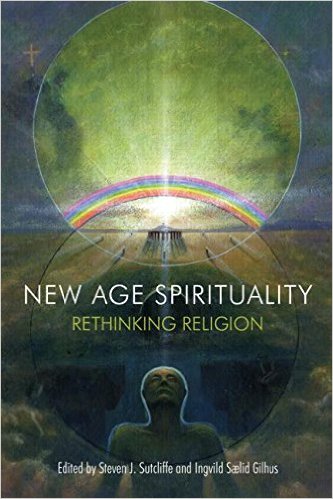
At the beginning of 2015, I wrote a review essay for the Bulletin for the Study of Religion entitled ‘First as Sociology, Then as Geography.’ It’s an essay on Steven Sutcliffe and Ingvild Saelid Gilhus’s 2014 edited volume, New Age Spiritualities: Rethinking Religion. As a 2000-word essay, it’s a bit longer than the average book review.
I had received the book during a coffee session with the Bulletin‘s editor Philip Tite. Among Tite’s many accomplishments, he has taught quite a number of courses at universities in Seattle, including at the University of Washington, and having met at a faculty meeting, we had coffee. He suggested that I review the book for the Bulletin, and as time passed, the book review became expanded into a ‘review essay,’ a long-form essay inspired by the book that simultaneously reviews it and expands on some of my thinking based on the book.
As the review essay will show, I learned quite a bit from the book about the shape of religious studies as a discipline. In fact, I found that one of the greatest insights from the book was that ‘religious studies,’ a field of study often disparaged as a hodgepodge collage of disciplines that takes as its focus a topic of study that is under crisis (‘what is religion?’ and increasingly ‘what is the secular?’), actually has a unitary disciplinary core that inquires into what ‘religion’ is and how it is constituted, with a disciplinary canon to boot. This ambitious edited volume attempts to recast that disciplinary canon away from the founding fathers of religious studies (who happen also to be the usual suspects in terms of the founders of social science writ large) in a New Age key.
It is this second move with which I take some issue. It’s not that I have some commitment to the original founding texts of modern religious studies. However, one of the points of agreement in this diverse volume was that at a sociological level, New Age spiritualities could be seen as becoming the new normal of how to do religion. This basic sociological point about new institutional religions fails to take seriously how this is also a geographical point – that this new sociology often is spatially exhibited by a certain class of middle-class workers trying to find inner peace through New Age spiritualities (a geography about which the authors themselves talk explicitly), and that reframing religion in this social geographic key would reinforce the stereotype that the entire discipline of religious studies is a factory for liberal bourgeois ideology.
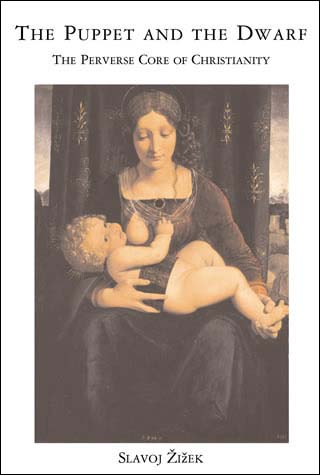
It’s funny that I came to this while reading this book and writing this essay prior to taking the work of Slavoj Žižek seriously, even though the essay’s title certainly takes its inspiration from the title of Žižek’s First as Tragedy, Then as Farce(but if you read the essay, you’ll find that there isn’t really a serious engagement with Žižek, not even with First as Tragedy – there’s only a very, very brief reference to Žižek on ideology). By the end of the review essay, I found myself appealing to Marx to suggest that ‘New Age spiritualities’ may well be the new opiate of the masses. However, this is the same point that Žižek makes about ‘Buddhism,’ especially in The Puppet and the Dwarf: The Perverse Core of Christianity. You could say that I’m thankful to the authors of this book, as well as to Tite and the Bulletin, for the chance to get these new thoughts going through pondering such new moves in religious studies as a discipline, though I suspect that it was never anyone’s intention for me to become so critical. I think it’s safe to say that you can expect me to follow this line of thought in my upcoming work.
I am very pleased to announce that I’ve published a piece in a special issue of Relegens Thréskeia, an open-access Brazilian religious studies journal. This recent special issue, edited by geographer Clevisson Pereira (Universidade Federal do Paraná), focuses on Espaço e Religião (Space and Religion). While most of the articles are published in Portuguese, they also brought on Thomas Tweed (University of Notre Dame) and myself to contribute English-language pieces. While Tweed’s piece proposes a theoretical framework for the study of geographies of religion, my piece is an empirical study of Ken Shigematsu, an Asian Canadian pastor in Vancouver. It also puts to work themes from my theoretical piece on ‘grounded theologies’ to understand Shigematsu’s church, Tenth Avenue Alliance Church, as what theologian John Milbank calls a ‘complex space.’
My piece is titled ‘Difference and the Establishment: An Asian Canadian Senior Pastor’s Evangelical Spatiality at Tenth Avenue Alliance Church in Vancouver, BC.’ Focusing on the spirituality of Ken Shigematsu, it demonstrates that his spiritual practice and his Asian Canadian sensibilities have reshaped Tenth Church, a historic Anglo-Canadian church, into a complex, multiracial, multi-class space. This analysis also suggests that there is a theoretical link between church growth theory and the ‘new religious economics’ in the sociology of religion and contends that a geographical approach might be able to complicate the models proposed by these approaches. The theological basis for Shigematsu’s theology, moreover, is the New Perspective on Paul (NPP) from New Testament studies; while I have written elsewhere of postcolonial Paul-within-Judaism models espoused by Mark Nanos and Sam Tsang, what is important to understand is that Shigematsu is himself deploying NPP and achieving these spatial results.
Here’s the abstract:
This paper explores how the evangelical spatiality of an Asian Canadian senior pastor at a historically Anglo-Saxon congregation has transformed it from an ethnically homogeneous, aging church to a heterogeneously-constituted gathering in an evangelical Protestant tradition. This piece challenges the conventional wisdom of the church growth movement and the new religious economics in the sociology of religion, both of which advise religious groups to construct homogeneity and consensus in efforts for numerical growth over against secularizing forces. The paper argues instead that Pastor Ken Shigematsu’s evangelical spatiality from the mid-1990s to the present must be understood as a theological embrace of difference in a church gifted to him by God over which he prayerfully pastors along with his staff. This paper understands Shigematsu’s evangelical spatiality through his own New Testament exegesis, his denominational affiliation with the Christian and Missionary Alliance, his ancient spiritual practices of indiscriminate hospitality, and his mystical reception of Tenth as a welcoming space toward a multiplicity of ethnic, class, and religious backgrounds. This article contributes to Asian Canadian Christian studies by discouraging a future where pan-Asian churches in Canada are homogeneously constructed and by exploring the concrete possibility of non-strategies in which heterogeneous, complex spaces that include Asian Canadians are received by pastors and studied by academics as a divine gift.
I am thankful to Clevisson Pereira for inviting me to participate in what for me is an exciting international endeavour, and I am also grateful to have worked so closely with Ken Shigematsu to have this paper produced. I have written about Shigematsu at a popular level in Ricepaper Magazine; consider this the full academic spelling-out of the thinking there. The paper is open-access, so I will be posting it on Academia.edu, and interested readers can also download it directly from Religens Thréskeia.
My first foray into this editorial role has been to collate a forum on Hong Kong’s Umbrella Movement and Theology. Modelled after the forum on Ferguson and Theology, this conversation brings together three theologians to talk about the theological significance of the Hong Kong pro-democracy protests that erupted into international attention on September 28, 2014 and that are expecting to be cleared on December 11. Because a fourth contributor was unable to submit his essay, I contributed the final piece in this forum.
Here’s a bit from the blurb that I wrote to introduce the forum:
While all this has been novel for Anglo-American audiences, the protests have been long in coming for those who have watched and participated in shaping the ground in Hong Kong since the 1997 handover. If theology has percolated to the surface of the Umbrella Movement, one can be sure that theologians have also been watching and participating. The Umbrella Movement may be far from over. But if its themes of democracy, church-state relations, and grounded theologies have been simmering under the surface for quite some time, it is still worth asking some theologians how the movement’s theological significance might be articulated.
With a liberation theologian (Kung), a feminist theologian (Wu), a New Testament scholar (Tsang), and a social scientist interloper (yours truly), we’ve only scratched the surface of what theologies need further exploration in Hong Kong, but we hope that we have raised enough issues for good conversation for some time to come.
Rob Bell has gotten a lot of attention in the evangelical news cycle over the past few days. As Bell is releasing a new book and is solidifying his association with Oprah, the evangelical and ‘progressive Christian’ Internet networks have been ablaze. Books and Culture, for example, has mocked Bell. The Gospel Coalition has excoriated his new book on marriage. Danielle Shroyer has defended Bell as an evangelical. Sarah Pulliam Bailey has analyzed Bell. Tony Jones has analyzed the analysis.
My concern with much of this analysis is that it has left out the University of Washington’s resident expert on Rob Bell, James K. Wellman, Jr. True, Wellman is my postdoctoral supervisor, which might explain why I’m saying something about him.
Have a look. This is no mere evangelical discussion. This is about the academic study of religion – and we have Wellman to thank for making that connection.
Congregation in front of the Christ Church of China, Vancouver, B.C., 1955 | Creator: Leong Ding Bong | Source: UBC Library Digital Archives
I am pleased to be presenting a paper at this current Society for the Scientific Study of Religion in Indianapolis during this weekend of 31 October to 2 November.
My paper is titled ‘The legal implications of ‘internal doctrinal disputes’: Chong v. Lee, Asian Canadian congregational fractures, and new religious publics in Vancouver, BC.’ It will be given at 1 PM on 31 October, in White River Ballroom B of the JW Marriott Indianapolis in a session titled ‘Religion, Policy, Doctrine.’ Here’s the abstract:
This paper explores the legal implications of immigrant congregational fractures. Examining British Columbia’s 1981 precedent case Chong v. Lee, I explore how internal congregational disputes regarding both the meaning of Chineseness and the practice of baptism at Vancouver’s Christ Church of China produced the Canadian legal doctrine that religious property cannot be diverted for theological purposes that differ from the community’s founding teaching. Drawing 50 key informants interviews, I argue that the private congregational tensions often explored in ethnographies of immigrant religious communities must be re-examined for their legal implications. Not only have other Asian Canadian communities drawn on the Chong case to take their internal theological disputes to court, but Anglican parishes (including three Chinese Canadian ones) departing from the Vancouver diocese over sexuality issues engaged the precedent to insist on keeping their buildings. This paper intervenes in the sociology of religion by insisting that putatively private congregational dynamics in immigrant religious communities inevitably engage the state’s legal apparatus.
I will focus mostly on Chong as a legal precedent and will attempt once again to engage the social scientists of religion here with an argument on the constitution of congregational space. All are welcome. I look forward to a great conversation.
I am very grateful for the good work that SCMP journalist Jennifer Ngo has done on religion in the Umbrella Movement protests currently in Hong Kong. She has interviewed an array of religious sources on the Occupy movement. Here were my comments:
Justin Tse, a social geographer and postdoctoral fellow at the University of Washington, conducted extensive research on the relationship of Christians to civil disobedience in Hong Kong including the “Umbrella Movement”. He said Christian influence went beyond the initial participation of believers.
“This is not to say that official church institutions are deeply involved,” he wrote in an email. “Instead, what it means is that Hong Kong people have been so deeply influenced by Christianity through a variety of civil society channels – schools, media, social services – that they are able to practice and articulate their activism in Christian terms.”
Calls made by official church bodies may be modest, while individual clergy or parishes showed more support, he said.
In the Vancouver Sun, Douglas Todd has given the Canadian public a fascinating discussion piece on the limits of liberal multicultural democracy. I’m quoted in the piece, so I thought I might offer a few critical reflections in light of what Todd says.
Todd’s piece takes its departure from what he describes as the rise of ‘religious extremists’ and what Immigration Minister Jason Kenney calls ‘homegrown religious radicals’ due to contemporary Canadian migration policy. Interviewing Liberal politician Ujjal Dosanjh and the Laurier Institute’s Farid Rohani, Todd finds these liberals of colour are themselves concerned that new migration trends to Canada are bringing more forms of abusive patriarchy within families, opposition to interracial and interreligious marriage, refusal to fit into the unspoken secular sartorial code in Canadian workplaces, and homophobic discrimination. On that last point, Todd reaches out in collegial fashion and quotes me: ‘Both Rohani and Dosanjh are aware of widespread anti-homosexual beliefs among many religious immigrants, which can lead to actual discrimination. And University of B.C.-trained scholar Justin Tse has cited the strong degree to which many Chinese Christian immigrants find Canada’s human rights laws regarding homosexuality “ridiculous.”’ The main point of the article, in turn, is that Canadian liberal democratic values are under strain from these new migrations and thus needed to be guarded more carefully. What’s smart about the article is that Todd seldom quotes from white Canadian public figures; all of the quotes are from people of colour, including me.
In many ways, Todd represents me fairly well. The attitude that Canadian human rights legislation is ‘ridiculous’ is a direct reference to my dissertation, which was cited in the South China Morning Post saying the same thing – that many of conservative Cantonese evangelicals with whom I spoke in Vancouver felt that Canadian human rights legislation was ‘ridiculous.’ That this is what my dissertation actually finds among conservative Cantonese evangelicals in Vancouver means that I feel very well-quoted and thankful that Todd has reached out yet again in a such a fine showing of collegiality.
But because this is a discussion piece, I also feel that I’m allowed to register a bit of collegial dissent from Todd’s conclusions. This is because I think Todd and I, while recognizing each other as colleagues in the public forum, are working on two fundamentally different social projects.
Gérard Bouchard (left) and Charles Taylor (right) listen intently.
While Todd makes the case that Canada has to guard its liberal multicultural democratic values, my project is to interrogate why it is that some migrants — in my case, some (but not all) Cantonese-speaking Protestants — were opposing the very liberal things that Todd wants to guard. I don’t pass judgment; I ask why. This is because the social (and arguably, political) thrust of my academic project is in many ways informed by Canadian philosopher Charles Taylor and his call for mutlicultural societies to practice the ‘politics of recognition.’ What this means is that various communities in the modern world have taken on certain identities that they don’t want to be unrecognized or misrecognized; misrecognition, in fact, can be viewed as an insult. What we have to do, Taylor proposes, is to recognize the other — to get past simple disagreements to understand precisely how the other’s identity is formed and how that othered identity is in fact part of the ‘we’ in this society. Taylor himself has put that into political practice: at a time when controversy erupted in the mid-2000s over head-coverings in Quebec (as Todd notes about Quebec’s proposed Charter of Values, it’s still under contestation), Taylor teamed up with Gérard Bouchard to form a commission to get every voice possible on the record about the practice of multiculturalism/interculturalism in Quebec, including all the nasty stuff people wanted to say about the hijab, niqab, and sundry. The result was a report titled Building the Future: A Time for Reconciliation, in which Taylor and Bouchard painstakingly detail the problems with interculturalism in Quebec, report on every possible voice that they heard during their time on the commission, and propose that what’s needed is an open secularism, a sort of society where religion is not excluded but in fact included in everyday public deliberations.
In many ways, that’s what that section in my dissertation on Cantonese evangelicals in Vancouver calling Canadian human rights legislation ‘ridiculous’ is trying to do. To stop at that assertion of ‘ridiculousness’ is to cut the project short right at the beginning. If you read the dissertation (yes, it is publicly accessible), you’ll find that my question then goes to why these Cantonese evangelicals thought that Canadian human rights legislation tended to be ‘ridiculous.’ As the South China Morning Post succinctly quoted me in May, it’s because the sort of rights-based legislation around sexuality (hate crime bills, same-sex marriage, transgender rights, etc.) went against a certain vision of a ‘rational, orderly society.’ As I discovered, this wasn’t so much a ‘culture’ thing — ‘Chineseness’ was frequently invoked and qualified by my interviewees — but aperformative agendathat understood best practices in civil society to be the creation of private, family-based economic units in which the second generation could be trained to become productive, private citizens in Canada. This means that sexuality is only the tip of the iceberg; other issues that contributed to what they might call the ‘irrationalization’ of society included the legalization of marijuana (medical or otherwise), harm-reduction drug treatment (some spoke of methadone; a few contested halfway houses in their neighbourhoods; most spoke of Vancouver’s inSite safe-injection program), the Anglican Church of Canada’s embrace of religious and sexual pluralism, and the building and expansion of casinos. The Cantonese evangelical public activism that propels this vision is certainly not un-Canadian; it is Chinese Christians wading into the fray of the partisan debates around what it means to be Canadian. That is, the fact that it is a socially conservative, privatized understanding of Canadianness does not make it un-Canadian; it makes it part of the debate around how Canada should be constituted as a nation.
My dissent, then, from Todd’s otherwise excellent, provocative discussion piece is that Todd seems to be portraying new immigrants, including the Chinese Christians that I studied, as bringing their religiously-based homeland politics to contest our hard-won liberal, multicultural, democratic Canadian values. But as my dissertation clearly states, the reasons that some Cantonese evangelicals thought that their rational, orderly vision of society was under assault tended to be modern and secular. It wasn’t a sort of backward homeland politics being imposed onto Canadian values. After all, this sort of politics of privatization comes from the need not to protect ‘culture,’ but as a business strategy in a globalizing world. This sort of rationality may be ideologically ‘conservative,’ but it is rooted in a very modern version of how society should operate. It may be theologically informed (as I argue elsewhere, what isn’t?!), but the reasons given for this rational, orderly society sound rather more to do with the very secular goal of maximizing private participation in the market economy. One may not agree with this sort of vision for a ‘rational, orderly society,’ especially one so rooted in the politics of privatization. But one cannot disagree that it is a vision.
In other words, I’m collegially dissenting from Todd’s piece because I don’t think that Canadians need to stand on guard for liberal, democratic, multicultural values. Instead, what’s more needed is a recognition that the ‘other’ is one of us, locked into the deliberations of democracy of which we are all a part. Contrary to Todd’s interview with Tung Chan in which Chan says that we need to ‘educate’ people and then let them go their merry way, this public deliberation is itself educative. It’s because it’s in deliberation — public, honest, open, and even heated deliberation (like the Bouchard-Taylor Report) — that we realize that the solution is never ideological entrenchment, but openness to the other as fellow citizens, persons even. Talking softens us. What perhaps needs emphasis is not so much the part of the national anthem to ‘stand on guard’ for Canada. It’s rather that if this is indeed ‘our home and native land,’ well, then, it is ours together. We need to keep talking.
Religion. Ethnicity. Wired. is where I’ll be blogging about current events in light of what I work on in geographies of religion, ethnicities, migrations, politics, and Pacific cities. I explicitly apply the grounded theologies axis of analysis wherever possible to some of the things I discuss. As you’ll see, the issues there are broader than the Cantonese-speaking Protestant Christians on which I’m actively writing in my doctoral dissertation. It’s a chance for readers to be able to see the breadth of what my seemingly narrow doctoral topic can actually encompass.
It’s also an exercise in public academia. On the blog, I routinely articulate how I think academia should be conceptualized as a public good. While academics are often perceived as impractical theoreticians pontificating from their revolving chairs, I make the case every so often on the blog that academics are interested in contributing the knowledge of their fields to an ongoing public democratic discussion, one that often results in concrete policy implications. This is not to say that academics pitch policy solutions–more often than not, we refrain from doing that–but this means that academics have a vital contribution to make to the public sphere that should not be overlooked by either the public or the university. In my posts, then, I try to be explicit about precisely where the academic contributions lie in the issues I’m raising.
So do follow me, and find me on Facebook and Twitter. And (I can’t resist this tagline) remember, if you stalk this page long enough, religion and ethnicity will wire you like coffee too.
As we watched Barack Obama justify drone warfare as a just war policy yesterday, we were struck by how many allusions there were to the work of mainline Protestant theologian, Reinhold Niebuhr. Wellman is arguably one of the current top authorities on Niebuhr, and generously, he took on some of my comments in his blog, including some work on Christian pacifism that responds to Niebuhr. If you have not seen Obama’s speech, do watch it here:
I see these comments as continuous with my work in geographies of religion, a field that I have theorized as not only as a subfield within cultural geographies (as it is more popularly conceived), but as an analytical axis by which political, economic, and cultural geographies can be interpreted. As I argued in my piece on ‘grounded theologies,’ geographers who use religion and secularization must reveal modern geographies to be theologically constituted, as the ‘secular’ can also be read (as per the Immanent Frame) as a theological orientation. Obama’s speech on security, counterterrorism, and geopolitics is a prime example. While it is ostensibly non-religious and non-theological, that he uses Niebuhr’s ‘proximate justice’ theory to argue that drone warfare is a form of just war policy suggests that he is in fact doing theology through public policy. Wellman and I argue that whatever you think of Obama, you really have to contend with Obama’s theological framework if you want to seriously engage him in democratic conversation and debate.
The implication here is that religious and theological literacy is a primary task for any ‘secular’ discipline. While there are hard secularists who may scoff at this notion, that even those parties lay claim to something called ‘secular’ is to say something about ‘religion’ or ‘theology’; if those statements are said ignorantly, it does a disfavour to everyone in the public forum. This is why I feel so happy that I’ll be working with Wellman. Recently, he had me sit in a seminar class that he’s teaching on American megachurches, where we conversed with non-geography students with arguably one of the most important books to come out in geographies of religion, Justin Wilford’s Sacred Subdivisions. As we covered a lot of ground exploring how Wilford conceptualizes Saddleback Church’s usage of space as a cultural geographer, I couldn’t help but be cheered that a discipline like human geography–one that has been conceptualized as uncritically secular until very recently–was contributing to public religious literacy in the form of these students grappling with this geography text. I think this signals good times ahead for geographies of religion, if I might be so presumptuous.
Working with Wellman will allow me to sharpen some of my own theological and religious reading, especially in American mainline Protestant theology, which will supplement what I currently know about geographies of evangelicalism and the critical crypto-Catholic conversation on secularization in theology and religious studies. This in turn will help refine what I have to say about Asian American, Asian Canadian, and Asia-Pacific religions. All of this is not a deviation from my work in geographies of religion and grounded theologies. It’s an extension and refinement, as all of this stuff is very spatially oriented and thus very geographical.
Thank you, Jim, for the opportunity. I look forward to the fun times ahead.



 Justin K.H. Tse